Home » Brazil Proposes Rigid Guardrails to Stop Government Abuse of Central Bank Digital Currency

Brazil Proposes Rigid Guardrails to Stop Government Abuse of Central Bank Digital Currency

Brazil Proposes Rigid Guardrails to Stop Government Abuse of Central Bank Digital Currency 1

Brazil’s Congress Moves To Limit State Control Over CBDCs

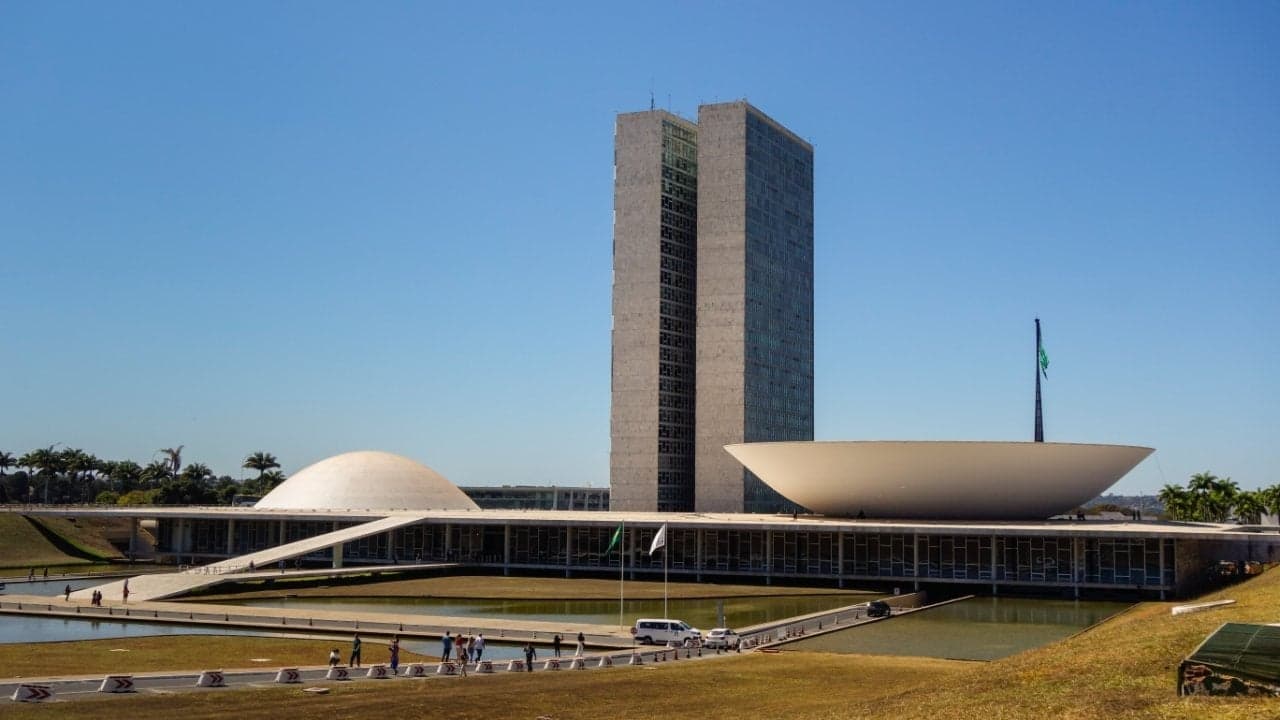
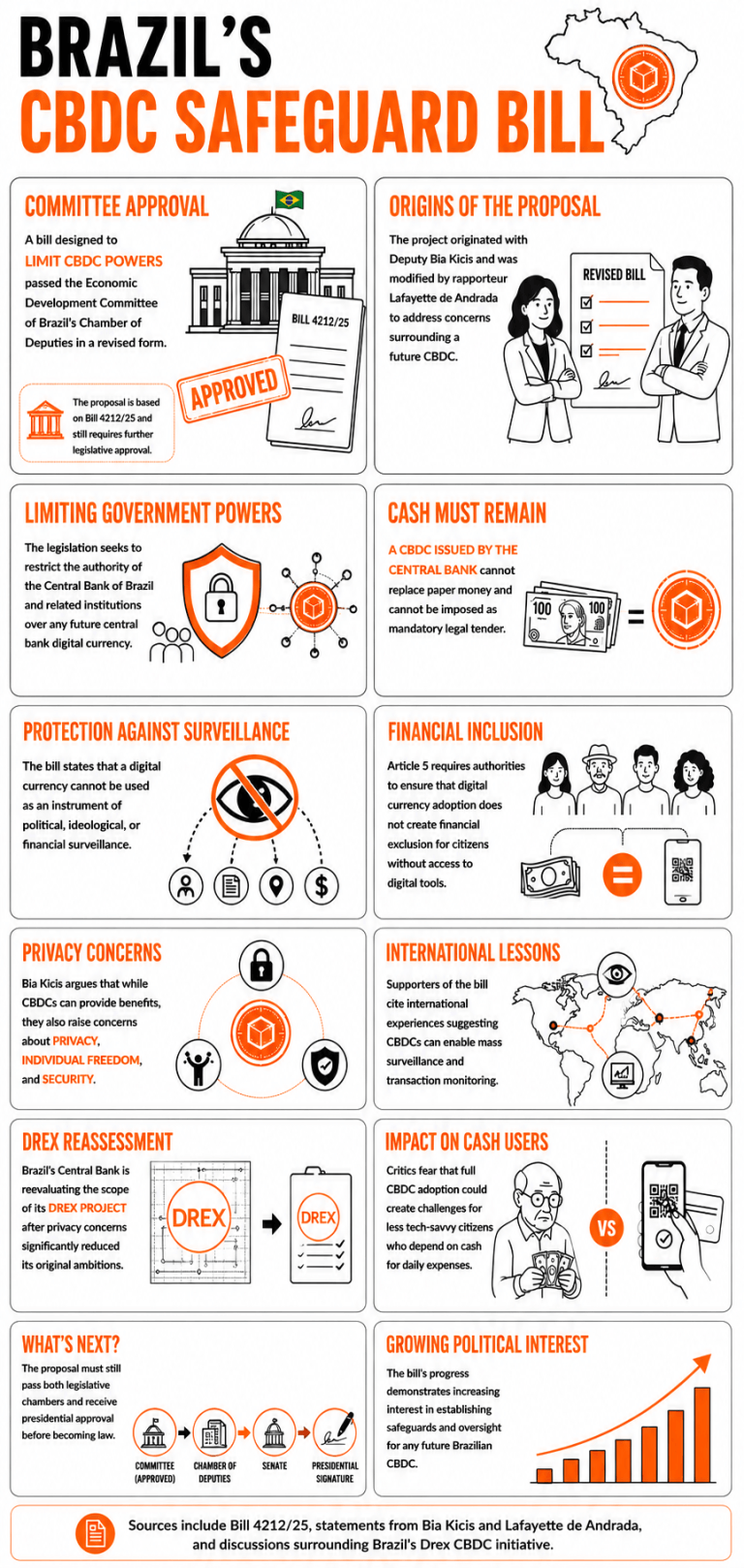
A bill that seeks to reduce the powers of the Brazilian state if a central bank digital currency ( CBDC) is approved passed the Economic Development Committee of the Chamber of Deputies in a revised form.

The project, based on Bill 4212/25, originally introduced by Deputy Bia Kicis and modified by rapporteur Lafayette de Andrada, seeks to limit the powers of the Central Bank of Brazil and other financial institutions linked to a future CBDC to protect economic freedom, privacy, and citizens’ security.
Brazil Proposes Rigid Guardrails to Stop Government Abuse of Central Bank Digital Currency 2

The law establishes that a digital currency issued by the central bank cannot substitute for paper money, cannot be forced as legal tender, and cannot be used as an instrument of political or ideological surveillance.

Furthermore, in its fifth article, the legislator stresses that governing bodies must ensure that “digital currency does not result in financial exclusion, always guaranteeing alternatives accessible to the population without access to digital media.”

Bicis states that while the creation of an official digital currency, like Brazil’s drex, “can bring important benefits, but it also raises legitimate concerns regarding privacy, individual freedom, and the security of citizens,” explaining that international experiences indicate these can be used for mass surveillance and transaction monitoring.

The project comes at a time when the central bank is reassessing the reach of its drex CBDC project, whose reach was significantly reduced due to privacy concerns. Nonetheless, there are still concerns about the effects of full adoption of a digital currency and the problems it would cause for less tech-savvy citizens who rely on cash for their day-to-day expenses.

While the project still has to be approved by both chambers and obtain presidential sanction, its advance shows that there is real interest in establishing controls over a hypothetical CBDC and its contentious use by the Brazilian government.

Related Articles

Alleged 'Pig Butchering' Prince Group Kingpin Hu Shi Arrested in Japan 1

Alleged ‘Pig Butchering’ Prince Group Kingpin Hu Shi Arrested in Japan

Cyprus National Tied To Prince Group Arrested in Japan Hu Shi, believed to be one of the managers of Prince

Bank of England Drops Stablecoin User Caps and Sets $53 Billion Issuance Limit 1

Bank of England Drops Stablecoin User Caps and Sets $53 Billion Issuance Limit

Bank of England Revises Stablecoin Rules to Support Growth The Bank of England has moved to make its systemic stablecoin

1,200 Tech Companies Push Senate to Pass CLARITY Act Quickly as US Crypto Rules Face Global Pressure 1

1,200 Tech Companies Push Senate to Pass CLARITY Act Quickly as US Crypto Rules Face Global Pressure

CTA Calls for Swift Senate Action on CLARITY Act The Consumer Technology Association (CTA) urged Senate leadership to advance the

Ireland Targets Crypto Assets in New Strategy to Disrupt Illicit Cash Flows 1

Ireland Targets Crypto Assets in New Strategy to Disrupt Illicit Cash Flows

Targeting Digital Assets and Crypto Loopholes Ireland announced a sweeping crackdown on financial crime on June 18, unveiling a national

VARA urges Dubai crypto companies to monitor FATF blacklists, enhancing risk management. 1

VARA urges Dubai crypto companies to monitor FATF blacklists, enhancing risk management.

New Framework Demands Quantitative Data The Dubai Virtual Assets Regulatory Authority (VARA) has published new guidance aimed at tightening financial

Bank of Ghana Orders Banks to Halt Crypto Dollar Wallets as Enforcement Risks Rise 1

Bank of Ghana Orders Banks to Halt Crypto Dollar Wallets as Enforcement Risks Rise

Breach of National Financial Laws The Bank of Ghana has issued a directive ordering regulated financial institutions to immediately halt