

Markets Adapt to Trade Wars, but the Game is Changing
On February 10th, U.S. stock markets closed higher across all three major indices, with the Nasdaq leading at a 0.98% gain. Meanwhile, gold and oil prices increased to $2,940 per ounce and $72.7 per barrel, respectively. Bitcoin also saw a modest rise, climbing to $98,000, while major altcoins rebounded significantly, pushing the total crypto market capitalization to $3.37 trillion.
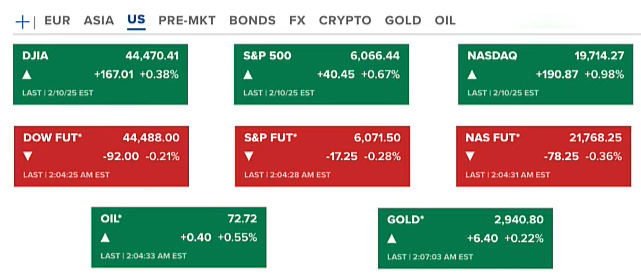
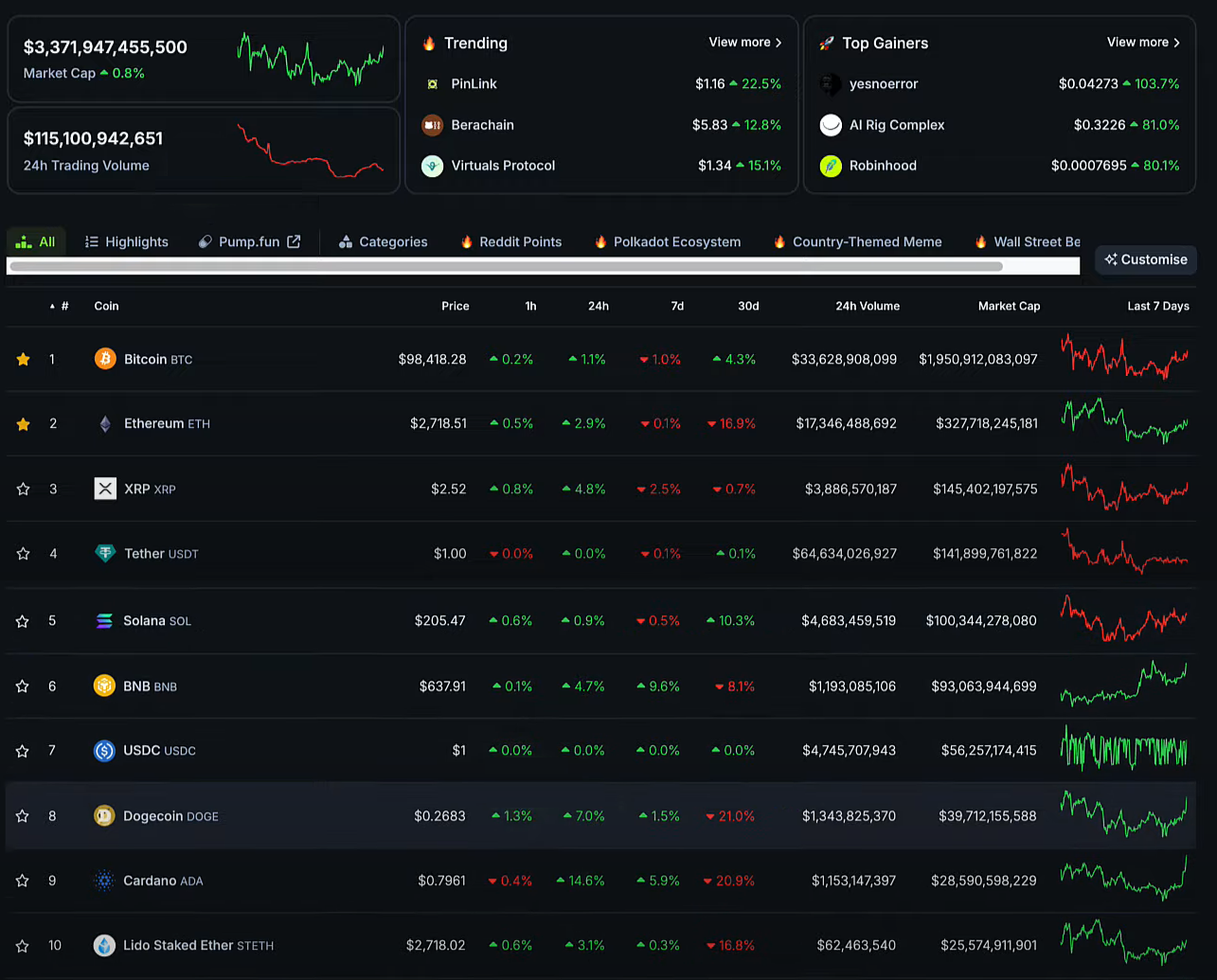
Despite ongoing geopolitical tensions and tariff announcements, financial markets have exhibited muted reactions. This phenomenon is not new—investors have historically adapted to economic uncertainties, such as the Ukraine conflict or previous U.S.-China trade disputes, eventually shifting their focus back to growth and long-term opportunities.
The U.S. recently imposed a 25% tariff on steel and aluminum, with economists suggesting that the policy might ultimately benefit the U.S. economy in the long run, despite short-term disruptions. Countries most affected include Canada, Mexico, Germany, and key Asian exporters. Interestingly, the market’s lack of significant reaction suggests that investors may have already priced in these geopolitical risks, shifting their attention elsewhere.
Bitcoin’s Cyclical Patterns Suggest Further Growth
When analyzing historical Bitcoin price movements across multiple halving cycles, striking similarities emerge. Some analysts argue that the current market trajectory closely resembles the 2017 cycle rather than 2021. If this correlation holds, February 2025 mirrors February 2017—a period that preceded significant volatility and exponential price growth.
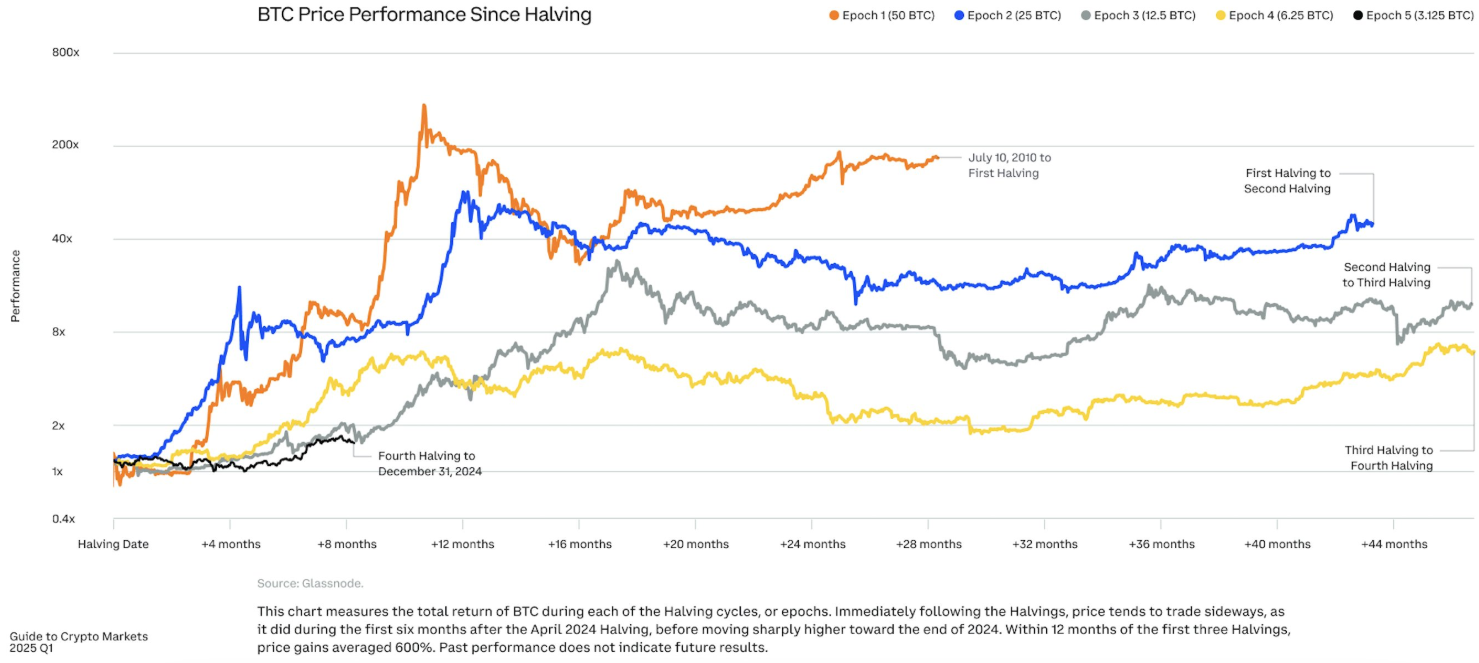
Bitcoin operates on a four-year halving cycle, and if historical trends persist, 2025 could see substantial gains. Institutional investors are keenly observing these patterns, understanding that Bitcoin has repeatedly defied skepticism, reaching new all-time highs despite numerous setbacks and market corrections.
Should the U.S. Diversify into Bitcoin?
Billionaire investor Dan Morehead recently suggested that the United States should diversify its national reserves into Bitcoin. Currently, the U.S. holds approximately $600 billion in gold reserves but lacks diversification beyond fiat-based assets. Morehead emphasized that Bitcoin, often referred to as “digital gold,” presents a superior alternative given its scarcity, security, and growing institutional acceptance.

With the U.S. government already holding 1% of Bitcoin’s total supply, Morehead advocates for continued accumulation. He notes that as global fiat currencies devalue over time, Bitcoin remains one of the few assets with a fixed supply, making it an attractive long-term hedge.
Historically, large institutions, pension funds, and sovereign entities have hesitated to invest in highly volatile assets. However, Bitcoin’s predictable supply schedule and history of surpassing previous all-time highs make it an appealing long-term investment. The growing institutional embrace of Bitcoin reinforces the argument that the U.S. should lead, rather than follow, in this emerging financial paradigm.
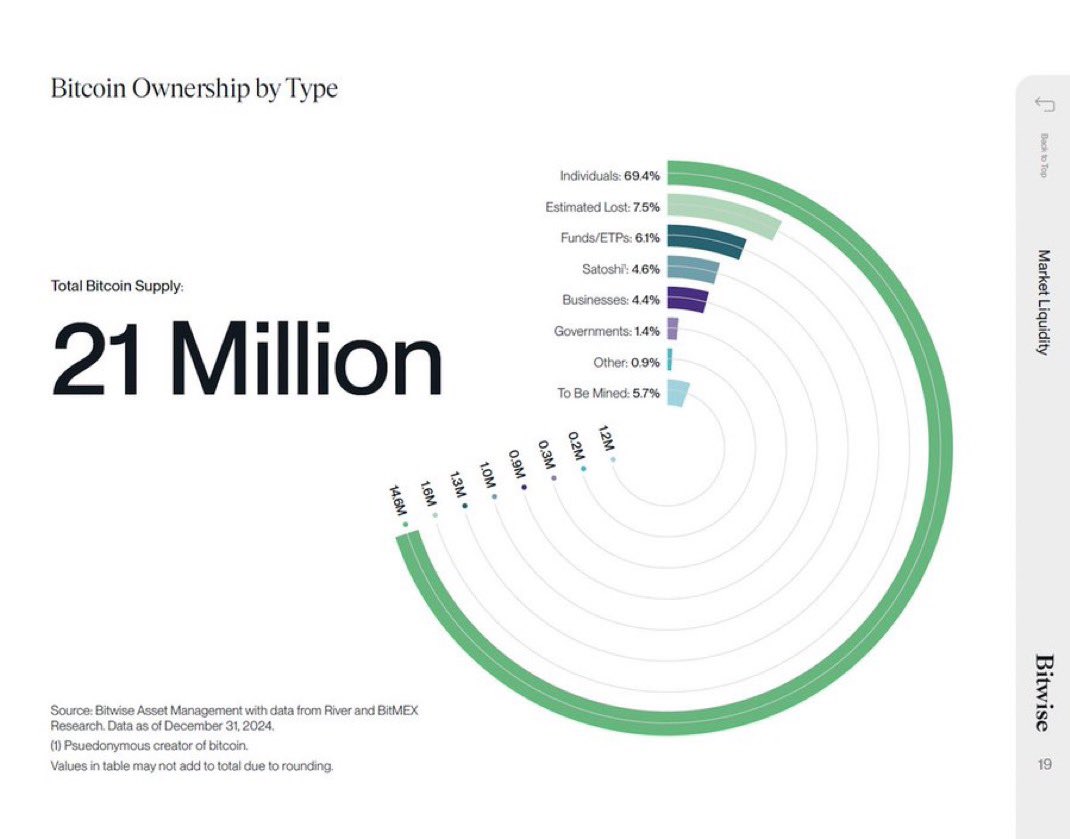
Bitwise Asset Management has noted that acquiring Bitcoin will become increasingly difficult as the remaining unmined supply dwindles. With only 5.7% of Bitcoin left to be mined and an estimated 7.5% permanently lost, supply constraints will likely drive future price appreciation.
The Relentless FUD: How Institutions Accumulate Bitcoin
Despite Bitcoin’s undeniable growth, mainstream financial media continues to fuel fear, uncertainty, and doubt (FUD). Negative news cycles often prompt retail investors to panic-sell, creating buying opportunities for institutional players. This cycle repeats as major institutions quietly accumulate Bitcoin during market dips while discouraging retail participation through pessimistic narratives.
The reality is that Bitcoin’s long-term trajectory remains bullish. The challenge for investors is not simply understanding Bitcoin but managing their own emotions amid market volatility. Those who capitulate during downturns often sell their holdings to patient institutions who understand Bitcoin’s broader economic implications.
Institutional Bitcoin Adoption Gains Momentum
Recent regulatory filings reveal that Tesla has increased its Bitcoin holdings from 9,720 BTC to 11,509 BTC. However, it remains unclear whether the additional holdings were acquired through purchases or other means.
Japan’s Metaplanet announced plans to raise ¥4 billion ($26.3 million) to expand its Bitcoin reserves, while investment giant Grayscale has submitted filings for a Cardano ETF with the SEC. The race to establish crypto-based financial products is intensifying, with multiple firms filing for XRP, Solana, and Litecoin ETFs.
The Nasdaq exchange has also formally submitted a 19b-4 filing to the SEC, requesting approval to list CoinShares’ XRP and Litecoin ETFs. This represents another step toward mainstream cryptocurrency adoption.
Meanwhile, the now-defunct FTX exchange has begun refunding creditors—albeit at 2022 valuations. This means that investors who held Bitcoin at $16,000 per BTC will only receive compensation based on that price, despite Bitcoin currently trading near $98,000.
Ethereum Faces Record Short Interest, Yet Institutional Inflows Persist
Institutional traders on the CME have built the largest short position in Ethereum’s history, increasing by 40% in just one week and surging over 500% since November 2024. This suggests significant bearish sentiment from Wall Street traders.
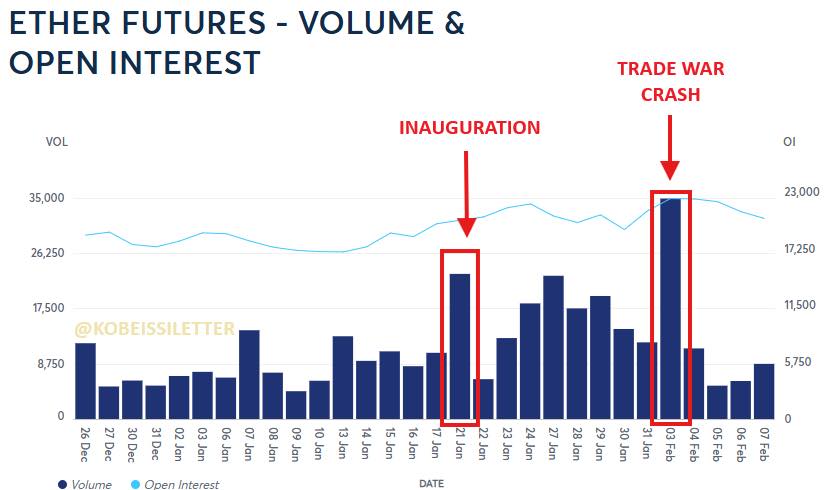
Despite this, Ethereum ETFs have experienced record inflows, with over $2 billion entering the market in just three weeks. The largest single-week inflow reached $854 million, a record-high institutional investment in Ethereum.
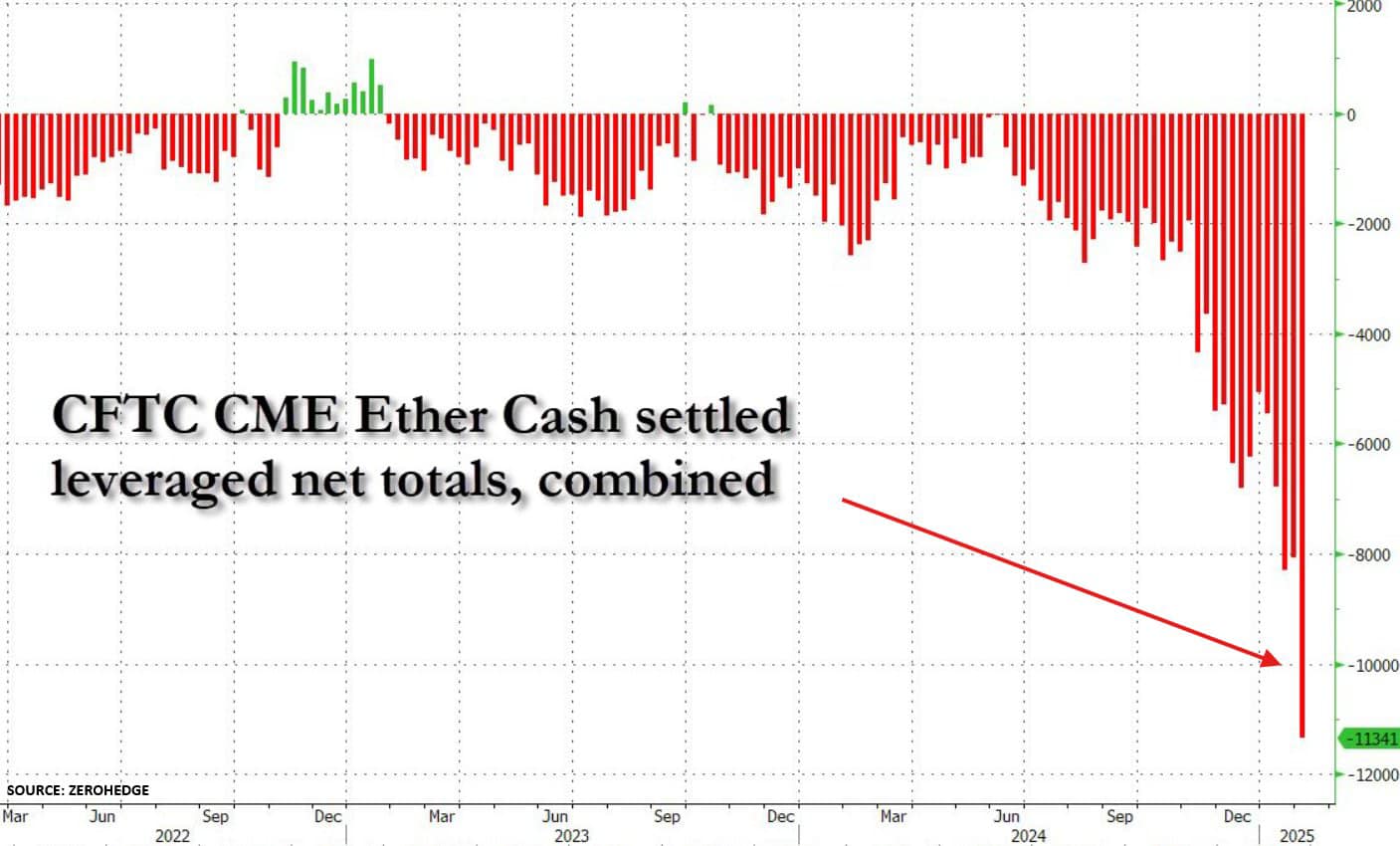
Ethereum currently trades approximately 45% below its November 2021 all-time high, yet it has underperformed other major cryptocurrencies, including Bitcoin. Some analysts suspect market manipulation, while others believe institutional traders are hedging against broader crypto market risks.
Interestingly, despite the Trump administration’s apparent pro-Ethereum stance, ETH continues to face significant short pressure. Meanwhile, Bitcoin remains near its all-time high, underscoring the differing market perceptions of the two assets.
The Future of Global Trade Wars and Their Market Impact
As geopolitical tensions rise, trade war fears are resurfacing. Former U.S. President Donald Trump recently announced plans to impose a 25% tariff on all steel and aluminum imports, exacerbating concerns of retaliatory trade measures. These developments echo the 2018–2020 U.S.-China trade war, which disrupted global supply chains and triggered market volatility.

Looking back at past trade conflicts, markets initially reacted negatively but eventually adapted. For instance, the S&P 500 dropped 14% during the early months of the 2018 trade war but later rebounded to new highs. Similarly, Bitcoin fell to $3,400 in December 2018 before surging to $12,000 by mid-2019.
These historical patterns reinforce the notion that while trade wars create short-term volatility, markets ultimately adjust and recover. As governments and institutions navigate these complexities, Bitcoin’s value proposition as a decentralized, non-sovereign asset remains increasingly compelling.
Final Thoughts: The Fight for Bitcoin’s Future
Bitcoin continues to evolve from a speculative asset into a legitimate financial instrument embraced by institutions, corporations, and even governments. The ongoing geopolitical and macroeconomic shifts highlight Bitcoin’s growing relevance in a world plagued by currency devaluation, trade disputes, and regulatory uncertainty.
Whether through institutional accumulation, government adoption, or macroeconomic necessity, Bitcoin’s role in the global financial system is only set to expand. The real question is not whether Bitcoin will succeed, but rather who will accumulate the most before it becomes a widely accepted reserve asset.