

Bitcoin Climbs to Record Highs Amid U.S. Market Turmoil
Bitcoin defied broader market turbulence to surge past $111,000, establishing a new all-time high. This rise occurred as U.S. equity markets faced a sharp decline, with the Dow Jones falling 1.91%, and both the S&P 500 and Nasdaq retreating by over 1.4%. Investor sentiment has been rattled by surging Treasury yields, weak bond auction demand, and escalating concerns over U.S. fiscal policy.
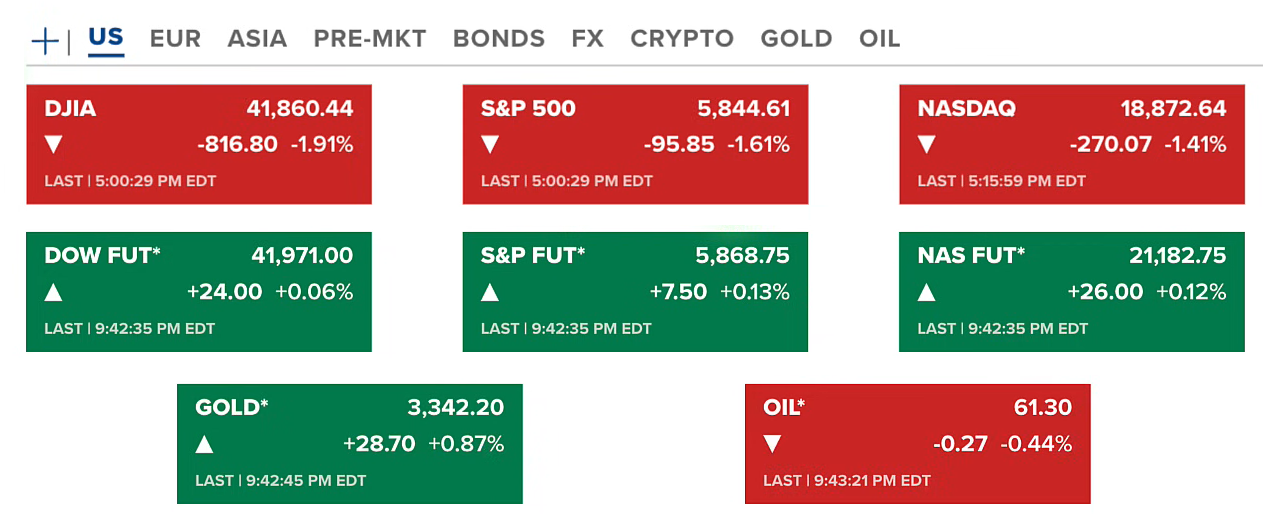
Treasury yields climbed after a $16 billion auction of 20-year bonds revealed soft demand. The resulting yield of 5.047%—well above the recent average of 4.613%—marked the highest level of the year, highlighting growing skepticism around the U.S. debt outlook. Following the auction, yields on both 20- and 30-year bonds breached the 5% threshold for the first time since October 2023. With bond prices falling, equity investors braced for tightening financial conditions.
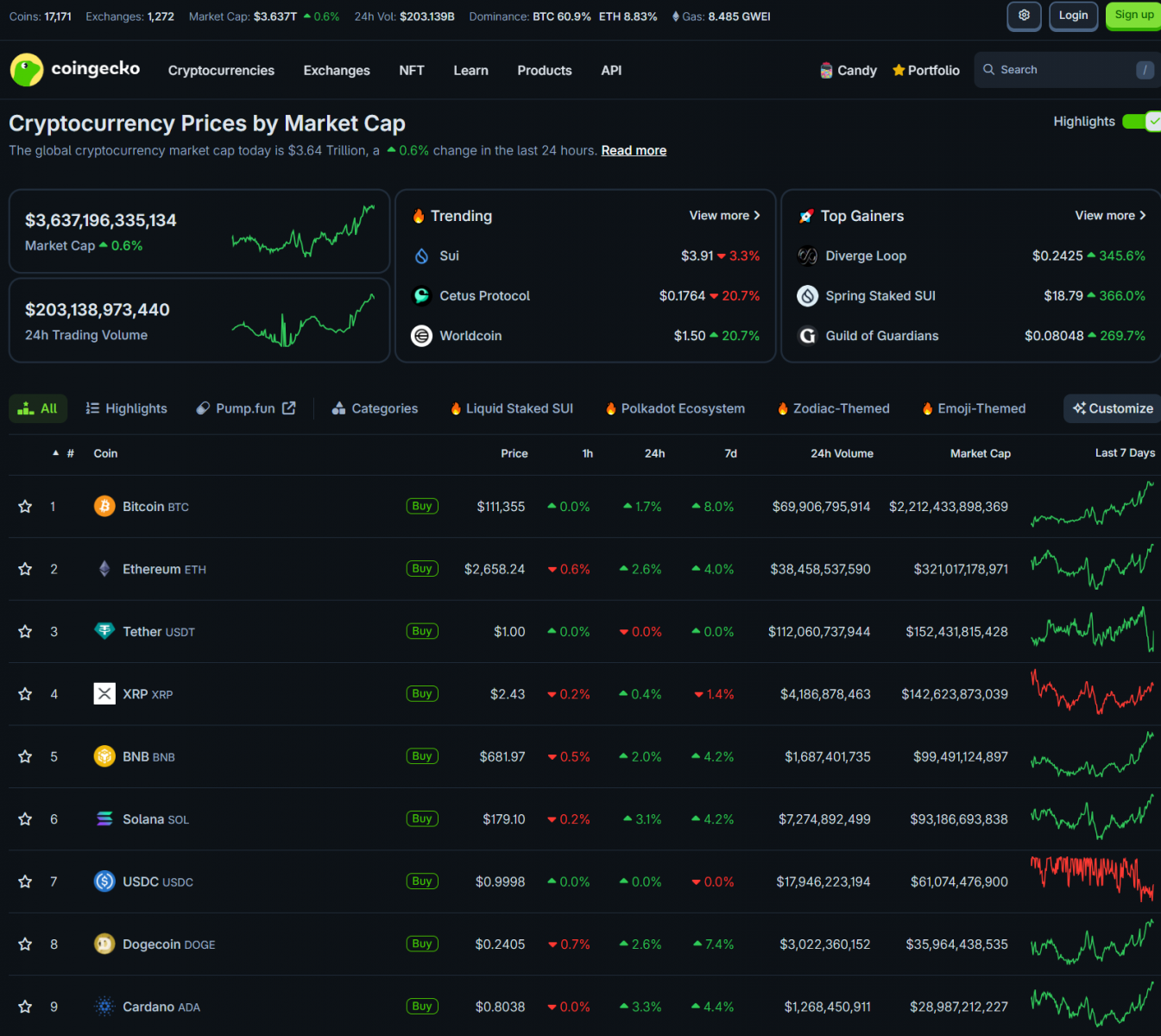
In contrast, the crypto market diverged strongly from the macro gloom. Bitcoin’s rally lifted total crypto market capitalization to $3.637 trillion. Altcoins followed suit, with a broad green wave across major names. Notably, Bitcoin’s market cap now surpasses Amazon’s, making it the fifth most valuable asset globally.
MicroStrategy’s Bitcoin Windfall: A Strategic Long-Term Hold
With Bitcoin trading above $110,000, MicroStrategy’s Bitcoin holdings have swelled in value, with unrealized gains exceeding $22.7 billion. While this figure draws admiration, the reality is more nuanced. The firm has never relied on selling Bitcoin. Its core strategy remains accumulation and long-term holding—an approach that has redefined its market valuation and equity narrative.

Founded as a software analytics firm, MicroStrategy was once a star during the dotcom boom, with its shares peaking at $313 in 2000. However, it faded from investor attention until 2020, when under Michael Saylor’s leadership, it became the first publicly traded company to adopt Bitcoin as a treasury reserve asset. Since then, its stock price has been highly correlated with Bitcoin’s movements.
During the crypto winter of 2022, many predicted MicroStrategy’s collapse, especially amid scandals like FTX and Luna. Instead, the firm doubled down, issuing convertible bonds and acquiring Bitcoin at increasingly strategic levels. Saylor also liquidated equity positions—selling over $200 million in stock in 2023—to maintain liquidity without touching their BTC holdings.
The model is gaining traction. Japan’s Metaplanet adopted a similar strategy and has since seen its stock price soar by over 1,455%, despite being one of the most heavily shorted equities in Japan previously. Yet, MicroStrategy’s endurance also reflects its robust financial foundation and risk management—qualities that copycat firms may lack.
U.S. Stablecoin Regulation Advances
In Washington, the GENIUS Act—a pivotal bill establishing legal clarity for stablecoins—has progressed past the cloture vote, allowing full Senate deliberation. If approved, the bill will move to the House of Representatives before potentially landing on President Trump’s desk.
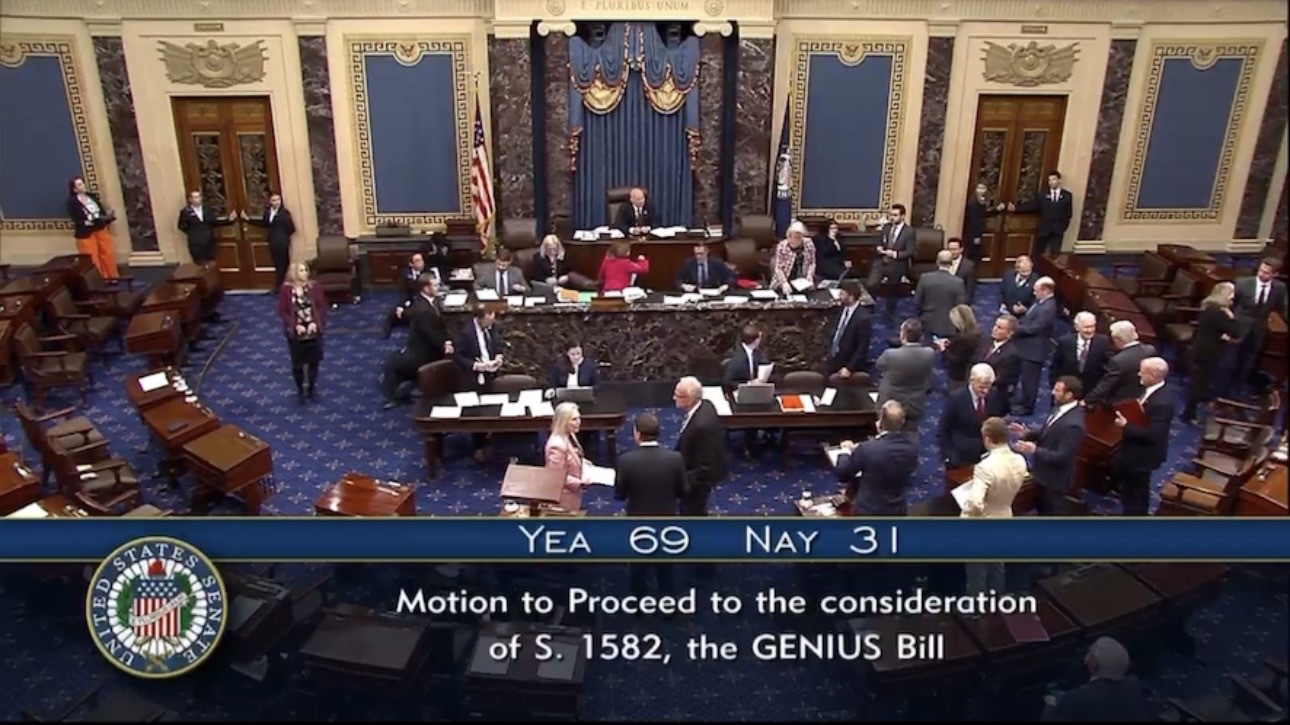
The bipartisan support is notable. Over 15 Democratic senators backed the bill, reflecting growing political consensus. According to investor David Sacks, stablecoins present an opportunity to modernize payment infrastructure while reinforcing the U.S. dollar’s role in the digital economy.
Beyond transaction efficiency, the legislation mandates that all stablecoins be backed 1:1 by cash or short-term Treasuries. This structure could funnel hundreds of billions—if not trillions—into U.S. government bonds, offering a crucial backstop to federal financing needs. With over $200 billion in stablecoins already circulating, codifying their legal framework could transform U.S. debt markets almost overnight.
The AI Disruption: From Software Engineers to Food Couriers
As crypto markets roar, another disruptive force reshapes labor markets: artificial intelligence. A Fortune report recently spotlighted a former software engineer, once earning $150,000 annually, who was forced into food delivery after over 800 job applications failed—underscoring AI’s threat to white-collar roles.

AI is now replacing high-skill jobs once thought immune to automation, including text editing, data analysis, and software development. This mirrors an earlier industrial shift where robotics displaced factory workers. Traditional roles like secretaries have already faded, and many more are at risk in the coming decade.
While this signals potential economic instability, it also reinforces interest in decentralized and censorship-resistant assets. As fiat currencies come under pressure and employment uncertainty rises, Bitcoin is increasingly viewed as a long-term hedge, similar to gold.
AI and Crypto: A Converging Future
The convergence of AI and crypto is no longer theoretical. OpenAI’s recent acquisition of Jony Ive’s hardware startup points to a broader ambition: integrating AI into devices that could rival Apple’s ecosystem. This hardware play reflects how AI is expanding beyond software into foundational consumer tech.
At the same time, crypto’s permissionless architecture is proving ideal for automated finance. Smart contracts already allow AI agents to execute trades, issue loans, or stake assets autonomously. In contrast to legacy banking systems, blockchain platforms can host AI-native applications with minimal human oversight, creating a new paradigm for decentralized economic coordination.
While AI displaces jobs, it also builds new ones—especially at the intersection of decentralized tech. The next generation of fintech may not involve human bankers but instead AI-driven agents optimizing capital flows on-chain.
Final Thoughts
As Wall Street grapples with debt anxiety and bond market volatility, Bitcoin is charting its own course—shattering record highs and attracting institutional capital. The global macro backdrop, riddled with inflation fears, rising yields, and AI-induced job insecurity, only amplifies the appeal of decentralized assets.
With MicroStrategy’s conviction paying off, the GENIUS Act moving forward, and AI redefining the nature of work, Bitcoin is no longer a fringe asset—it’s central to the new economic narrative. Investors and policymakers alike must now contend with a financial world where traditional frameworks are rapidly evolving—and Bitcoin stands tall at the center of that transformation.