Equity is a legal ownership interest in a company. A token is a digital unit recorded on a blockchain. The two get compared constantly because some tokens represent ownership or other securities-like rights, while many grant no ownership at all.
What you actually hold depends on the legal, economic, governance, and ownership rights attached to the instrument; whether it sits on-chain or off-chain is secondary. This guide explains what equity is, what a token can and cannot give you, how tokenized equity works, when a token counts as a security, and why a token’s label rarely tells you what you own.
Key Takeaways
- Equity is a legal ownership interest in a company: a residual claim on its value, usually carrying voting, dividend, and information rights. A token is a digital unit on a blockchain whose rights depend entirely on how it was designed.
- A token’s label tells you almost nothing. “Equity token,” “security token,” and “governance token” describe intent, not guaranteed rights; only the smart contract, legal terms, and disclosures do.
- Tokenized equity spans a wide range, from a real share recorded on-chain (genuine ownership) to a synthetic token that merely tracks a price and carries no claim on the company at all.
- US regulators judge tokens by economic substance, not technological form: a tokenized share is still a share, subject to the same securities rules, while many utility and commodity-like tokens fall outside the securities definition.
- Governance tokens steer a protocol; voting shares confer legal ownership of a company. The two rhyme, but they’re different instruments.
- Before buying anything labeled “tokenized stock,” check the documented rights, the issuer and any custodian, securities status, dilution risk, and what happens to your claim if the platform fails.
What Is Equity?
Equity is an ownership interest in a company or asset. In company finance, equity is the ownership represented by shares, also called stock, and it gives the holder a residual claim: a stake in whatever remains after debts are paid. The size and nature of that stake depend on the share class and the company’s governing documents.
Equity definition
Equity meaning comes down to ownership. Holding equity makes you a part-owner of the business, with a claim on its value and, often, a say in how it is run. That claim sits behind creditors, but it captures the upside if the company grows.
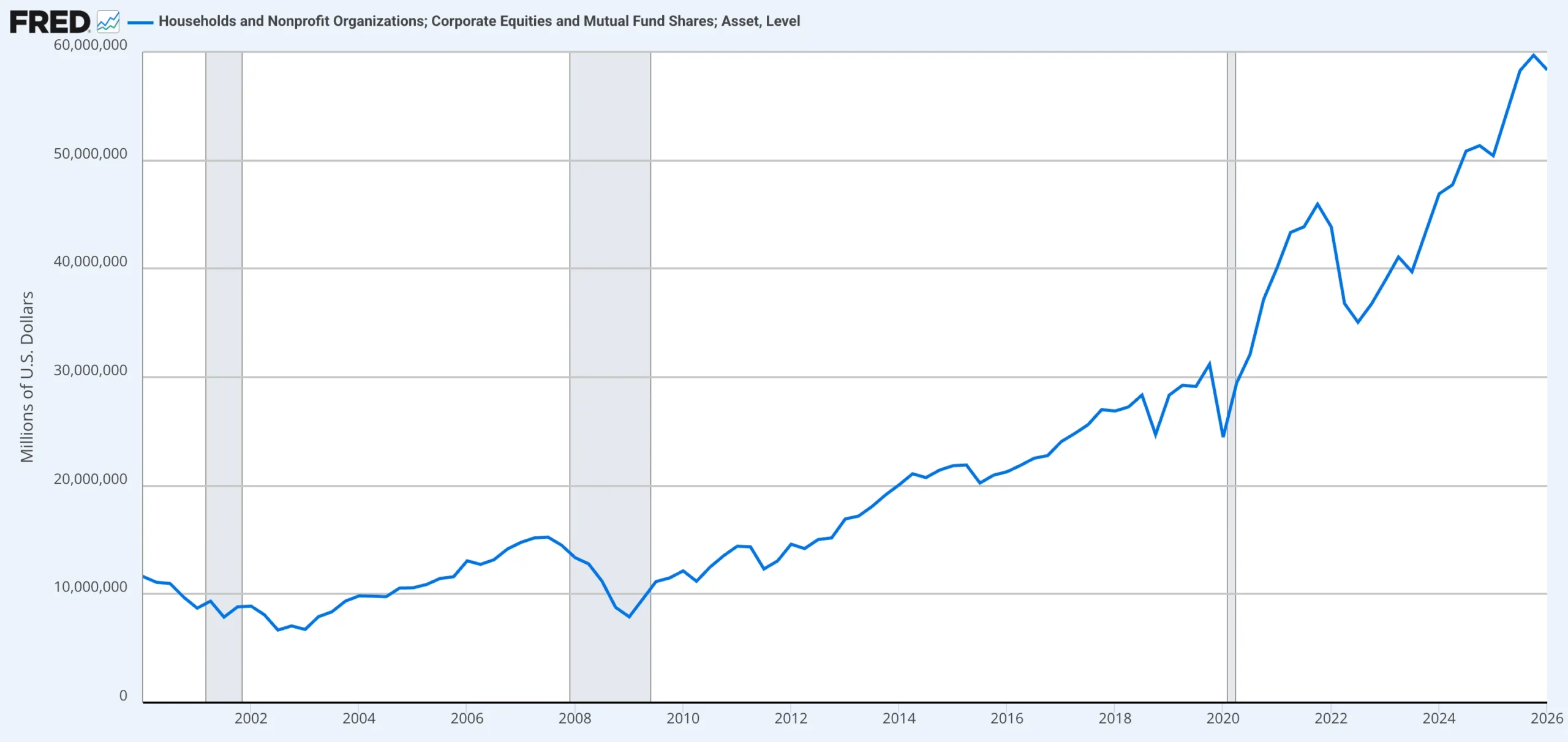
To grasp the monumental scale of this traditional ownership engine, consider that U.S. household and nonprofit holdings of corporate equities and mutual fund shares reached an all-time high approaching $60 trillion. This figure underscores the historical dominance of the legal equity framework as a reliable, long-term vehicle for wealth accumulation.
Shares, stocks, and ownership rights
A share is a single unit of company ownership. Hold 100 of a company’s 1,000 shares and you own a 10% ownership stake. Shares can be public, traded on exchanges, or private, held privately with transfer restrictions, and different classes carry different ownership rights.
Common shareholder rights
Depending on the share class and jurisdiction, shareholders may receive voting rights, dividend rights, information rights, and a liquidation claim. Common stock usually carries votes and variable dividends; preferred stock typically trades some control for priority on dividends and on assets if the company is wound down.
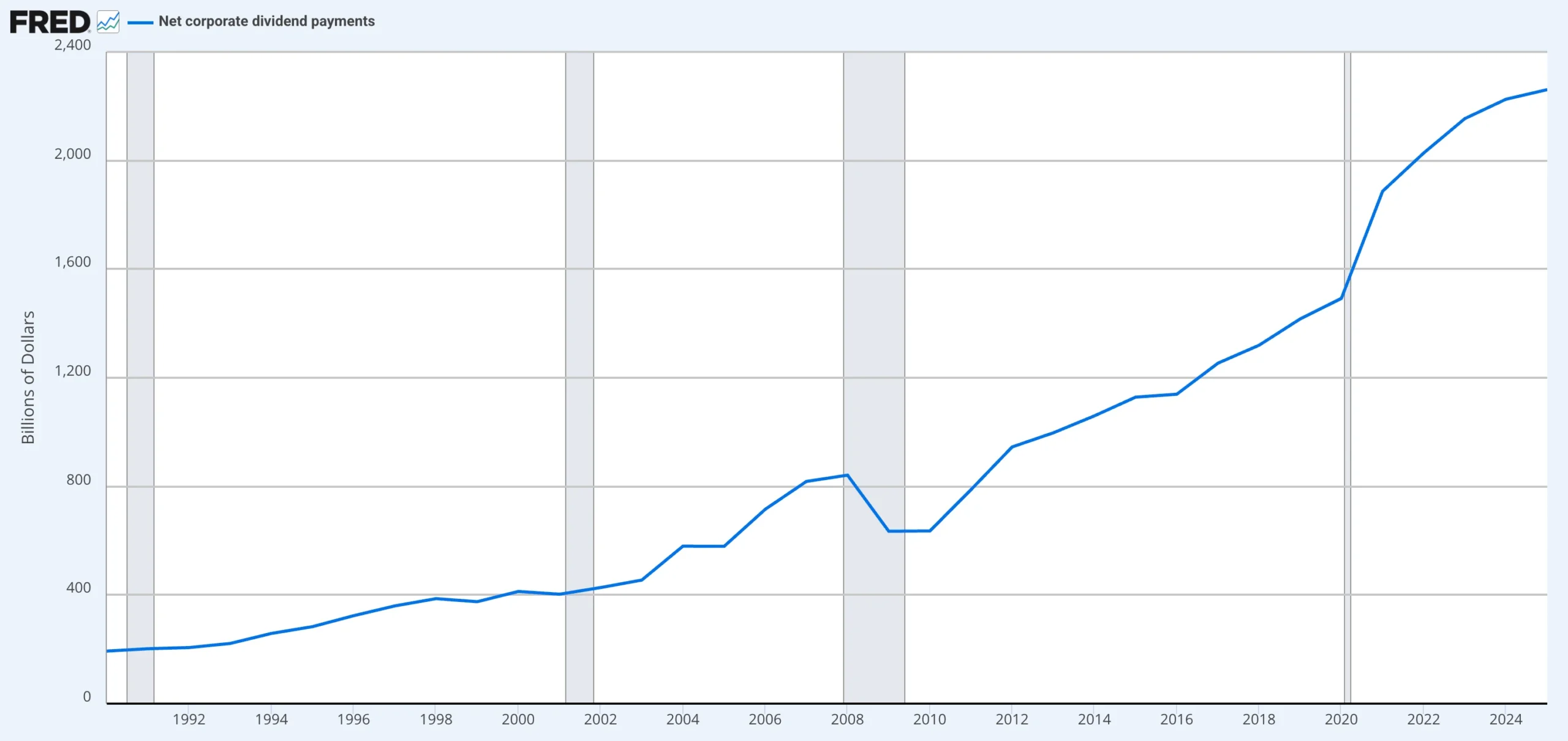
When an underlying enterprise succeeds, the real-world weight of dividend rights becomes undeniable; Federal Reserve data shows net corporate dividend payments in the U.S. climbing on a massive upward trajectory past $2.2 trillion annually. Holding a genuine equity share guarantees a legally enforceable straw dipped directly into this massive capital distribution stream.
 Equity conceptMeaningEquityOwnership interest in a company or assetShare / stockA unit of company ownershipShareholderA person or entity that owns sharesVoting rightsThe ability to vote on certain company mattersDividend rightsThe right to receive distributions if the company declares themEconomic rightsThe right to share in the company’s value or proceedsOwnership stakeThe percentage of the company you holdEquity conceptEquityMeaningOwnership interest in a company or assetEquity conceptShare / stockMeaningA unit of company ownershipEquity conceptShareholderMeaningA person or entity that owns sharesEquity conceptVoting rightsMeaningThe ability to vote on certain company mattersEquity conceptDividend rightsMeaningThe right to receive distributions if the company declares themEquity conceptEconomic rightsMeaningThe right to share in the company’s value or proceedsEquity conceptOwnership stakeMeaningThe percentage of the company you hold
Equity comes in different forms. Common stock, preferred stock, private shares, and employee equity each carry their own rights and restrictions.
What Is a Token?
A token is a digital unit recorded on a blockchain or other distributed ledger. It can stand for many things (access to a product, voting power in a protocol, a reward, a claim on an asset, or simply a transferable digital unit) and its behavior is set by a smart contract, the issuer’s documentation, and the law that applies. The rights come from that design; the word “token” alone tells you nothing.
Tokens as digital units on a blockchain
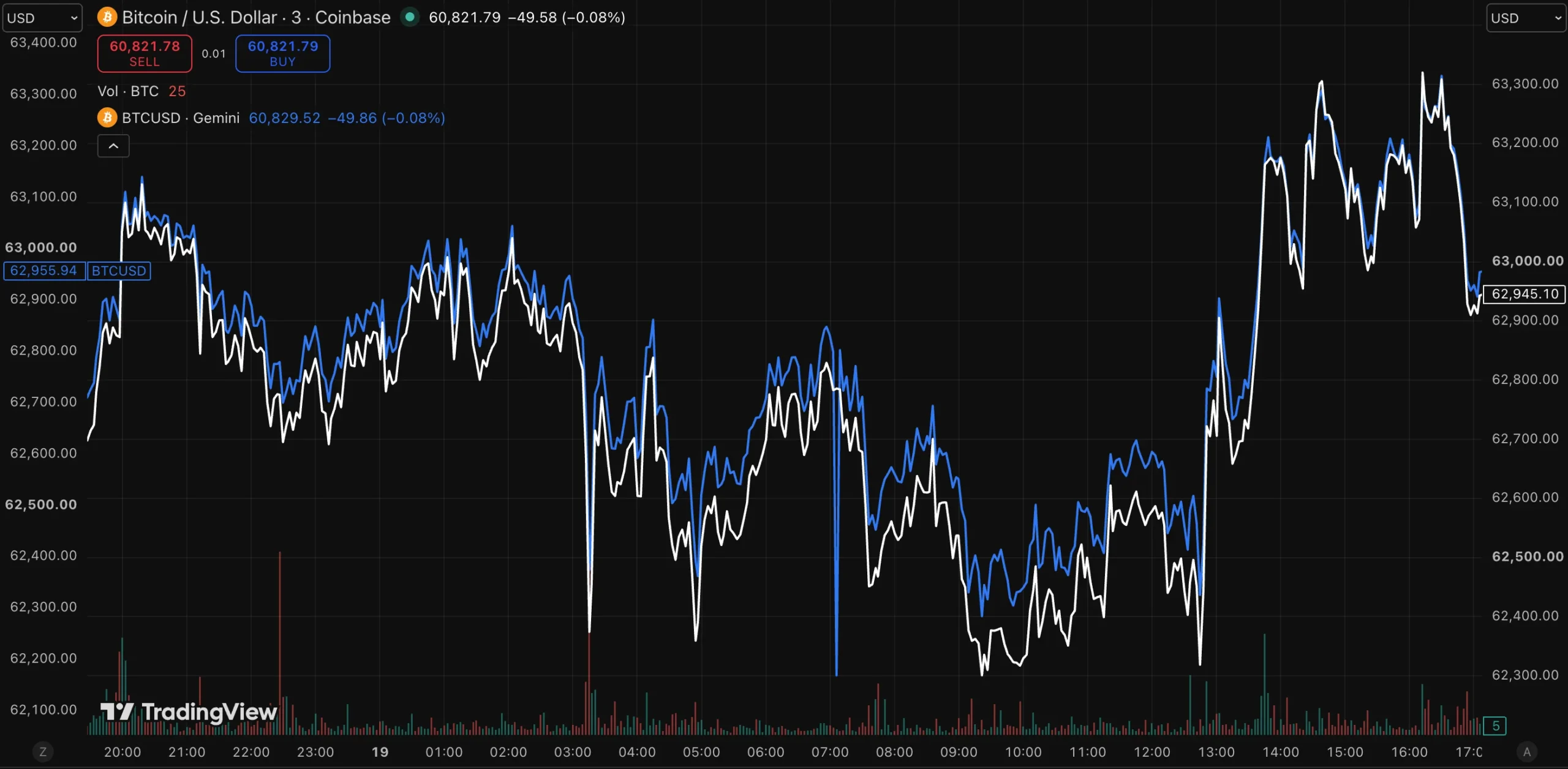
Ownership of a token is recorded on-chain and tied to a wallet. Whoever controls the wallet’s private keys controls the token, which is why self-custody hands both control and full responsibility to the holder. Unlike traditional equities that settle on highly synchronized, centralized national clearinghouses, tokens trade across decentralized, geographically fragmented global networks.
Because of this structural difference, the exact same digital asset can experience localized pricing discrepancies across different order books simultaneously, a phenomenon clearly visible when tracking the micro-divergences between Coinbase and Gemini’s live Bitcoin pricing feeds.
Fungible vs. non-fungible tokens
Fungible tokens are interchangeable, each unit identical to the next, the way one dollar equals another; most crypto tokens work this way. Non-fungible tokens (NFTs) are unique, each one distinct, which suits collectibles, credentials, and one-of-a-kind assets.
Tokens are defined by their rights and use
Two tokens can look identical on an exchange and grant completely different things. A token does not automatically confer ownership; the only reliable way to know what it grants is to read its smart contract, terms, and disclosures.
Token conceptMeaningTokenA digital unit recorded on a blockchainToken holderThe wallet or person that controls the tokenSmart contractThe code that defines how a token behavesUtility tokenA token used for access or functionalityGovernance tokenA token used to vote on protocol decisionsSecurity tokenA token representing securities-like rightsTokenomicsThe economic design of a tokenToken conceptTokenMeaningA digital unit recorded on a blockchainToken conceptToken holderMeaningThe wallet or person that controls the tokenToken conceptSmart contractMeaningThe code that defines how a token behavesToken conceptUtility tokenMeaningA token used for access or functionalityToken conceptGovernance tokenMeaningA token used to vote on protocol decisionsToken conceptSecurity tokenMeaningA token representing securities-like rightsToken conceptTokenomicsMeaningThe economic design of a token
Equity vs. Tokens: The Core Difference
Equity answers one question: how much of this company do I own? A token answers a different one first: what does this token actually grant me? Equity is a legal ownership interest defined by corporate and securities law. A token is a digital representation whose rights depend entirely on how it was built and sold.
FeatureEquityTokenBasic meaningOwnership interest in a companyDigital unit on a blockchainLegal statusGoverned by corporate and securities lawDepends on structure and jurisdictionHolderShareholderToken holderRightsOften ownership, economic, and voting rightsWhatever the token is designed to grantTransferBrokers, transfer agents, cap tables, or private agreementsOn-chain, where permittedSettlementTraditional financial railsBlockchain or hybrid railsValue sourceCompany performance and the rights attachedUtility, scarcity, governance, revenue rights, asset backing, or demandDocumentationCharter, shareholder agreements, offering docsWhitepaper, smart contract, terms, disclosuresCore questionWhat share and rights do I own?What rights does this token actually grant?FeatureBasic meaningEquityOwnership interest in a companyTokenDigital unit on a blockchainFeatureLegal statusEquityGoverned by corporate and securities lawTokenDepends on structure and jurisdictionFeatureHolderEquityShareholderTokenToken holderFeatureRightsEquityOften ownership, economic, and voting rightsTokenWhatever the token is designed to grantFeatureTransferEquityBrokers, transfer agents, cap tables, or private agreementsTokenOn-chain, where permittedFeatureSettlementEquityTraditional financial railsTokenBlockchain or hybrid railsFeatureValue sourceEquityCompany performance and the rights attachedTokenUtility, scarcity, governance, revenue rights, asset backing, or demandFeatureDocumentationEquityCharter, shareholder agreements, offering docsTokenWhitepaper, smart contract, terms, disclosuresFeatureCore questionEquityWhat share and rights do I own?TokenWhat rights does this token actually grant?
Equity is about ownership; a token is about digital representation. A token can carry ownership, though many carry none.
Shares vs. Tokens: A Quick Comparison
Side by side, the practical contrasts between a share and a token center on ownership, regulation, trading, and custody.
QuestionShare / stockTokenRepresents company ownership?Usually yesOnly if structured that wayTrades 24/7?Usually no, set market hoursOften yes, if transferableRecorded on-chain?Usually noYesCarries voting rights?SometimesOnly if the token terms allowPays dividends?SometimesOnly if designed and lawfulRegulated?UsuallyDepends; some tokens are securitiesCan be self-custodied?Rarely in traditional marketsOftenCan be lost through private-key loss?NoYes, if self-custodiedQuestionRepresents company ownership?Share / stockUsually yesTokenOnly if structured that wayQuestionTrades 24/7?Share / stockUsually no, set market hoursTokenOften yes, if transferableQuestionRecorded on-chain?Share / stockUsually noTokenYesQuestionCarries voting rights?Share / stockSometimesTokenOnly if the token terms allowQuestionPays dividends?Share / stockSometimesTokenOnly if designed and lawfulQuestionRegulated?Share / stockUsuallyTokenDepends; some tokens are securitiesQuestionCan be self-custodied?Share / stockRarely in traditional marketsTokenOftenQuestionCan be lost through private-key loss?Share / stockNoTokenYes, if self-custodied
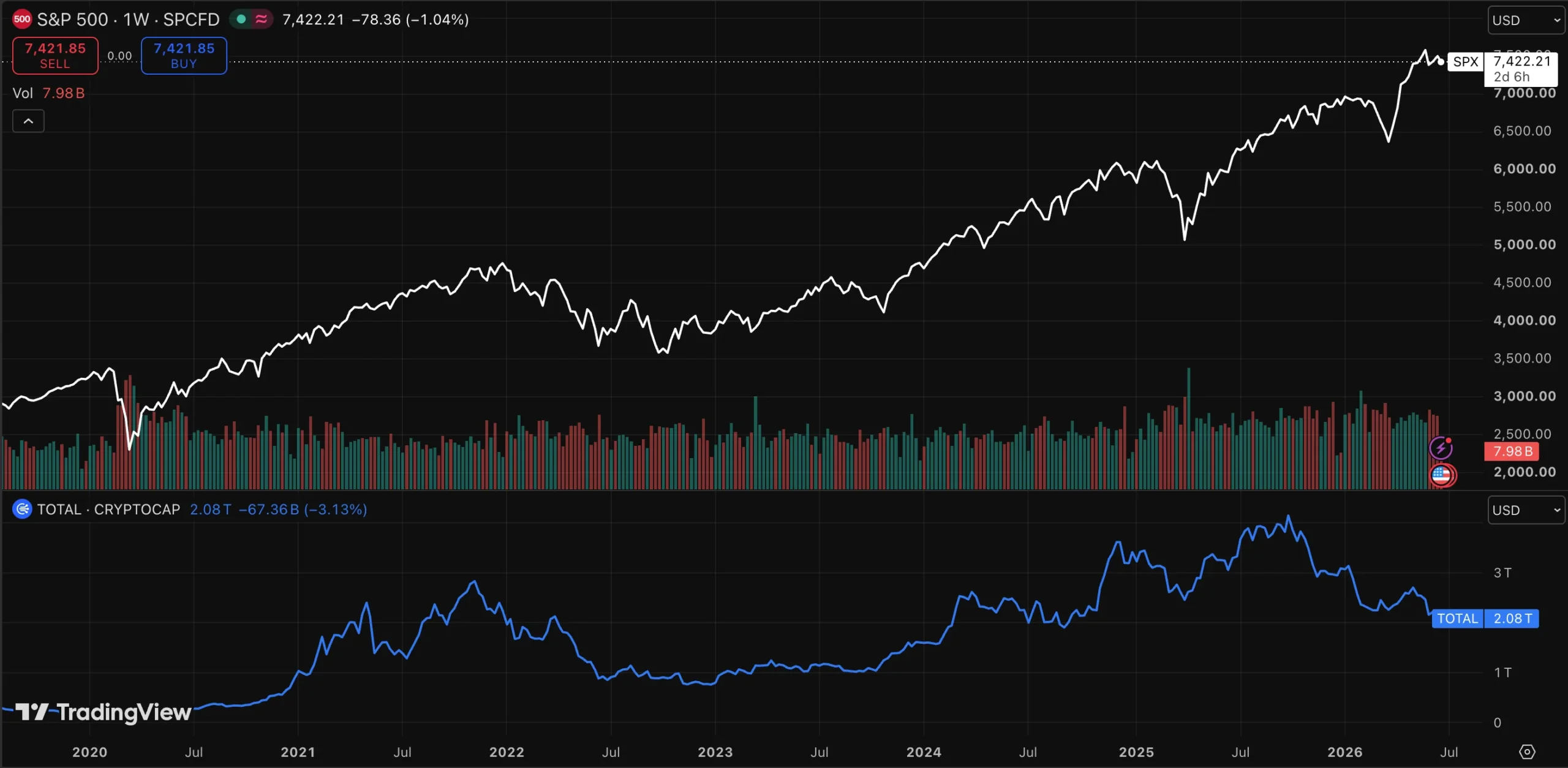
When we map these two paradigms side-by-side over a multi-year timeline, their operational behavior diverges sharply. Comparing the steady, compounding macroeconomic climb of the S&P 500 against the violent expansion and contraction cycles of the total crypto market cap highlights the immense volatility spread between a mature equity baseline and the digital asset frontier. Real equity tracks the aggregate, stable cash flows of productive corporate enterprises; tokens frequently track the hyper-reactive velocity of speculative market momentum.
What Rights Does Equity Give You?
Equity bundles several rights, though the exact mix varies by share class, jurisdiction, and the company’s documents.
Equity rightWhat it meansOwnership claimA legal interest in the companyVoting rightsA vote on directors or major decisionsDividend rightsA share of profits, if distributions are declaredInformation rightsAccess to certain company disclosuresLiquidation rightsA claim on assets, after creditors, if the company winds downTransfer rightsThe ability to sell or transfer shares, subject to restrictionsPreemptive rightsA chance to keep your ownership percentage in future raisesEquity rightOwnership claimWhat it meansA legal interest in the companyEquity rightVoting rightsWhat it meansA vote on directors or major decisionsEquity rightDividend rightsWhat it meansA share of profits, if distributions are declaredEquity rightInformation rightsWhat it meansAccess to certain company disclosuresEquity rightLiquidation rightsWhat it meansA claim on assets, after creditors, if the company winds downEquity rightTransfer rightsWhat it meansThe ability to sell or transfer shares, subject to restrictionsEquity rightPreemptive rightsWhat it meansA chance to keep your ownership percentage in future raises
These rights vary by share class, jurisdiction, and governing documents, and private-company shares often restrict transfers.
What Rights Can a Token Give You?
A token’s rights run from substantial to nothing, and the name on the listing tells you little. Read the rights from the project’s legal terms, smart contract, governance documents, and disclosures.
- Utility or access rights: The token unlocks an app’s features, fee discounts, or network functions. Utility tokens earn their value from use rather than ownership.
- Governance rights: The token votes on protocol proposals or DAO decisions. Governance influence over a protocol is a different thing from a legal ownership stake in a company.
- Economic rights: The token may pay fees, staking rewards, or distributions, but only where it is structured, and permitted, to do so.
- Security-like rights: The token may represent a regulated security, such as a profit share, equity, or debt, which brings securities rules into play.
- No rights beyond transferability: Many tokens grant nothing more than the ability to send them between wallets.
Token right / featureWhat it can meanTransferabilitySend the token between walletsUtility / accessUse an app, service, fee discount, or network functionGovernanceVote on protocol or DAO proposalsEconomic rightsFees, staking rewards, or distributions, if structured that wayAsset backingA claim on an underlying assetSecurity rightsA regulated security represented as a tokenNo enforceable rightsA tradable digital unit and nothing moreToken right / featureTransferabilityWhat it can meanSend the token between walletsToken right / featureUtility / accessWhat it can meanUse an app, service, fee discount, or network functionToken right / featureGovernanceWhat it can meanVote on protocol or DAO proposalsToken right / featureEconomic rightsWhat it can meanFees, staking rewards, or distributions, if structured that wayToken right / featureAsset backingWhat it can meanA claim on an underlying assetToken right / featureSecurity rightsWhat it can meanA regulated security represented as a tokenToken right / featureNo enforceable rightsWhat it can meanA tradable digital unit and nothing more
Ownership and Rights at a Glance
Mapping the same rights across equity and the main token types shows how much the answer depends on design.
RightEquityUtility tokenGovernance tokenTokenized equityOwnershipUsuallyUsually noUsually noDepends on structureVotingSometimesUsually noOften, over the protocolDependsDividends / distributionsSometimesUsually noUsually noDependsTransferabilityRestricted or market-basedUsually on-chainUsually on-chainOften restrictedLegal claimYesUsually limitedDependsDependsRightOwnershipEquityUsuallyUtility tokenUsually noGovernance tokenUsually noTokenized equityDepends on structureRightVotingEquitySometimesUtility tokenUsually noGovernance tokenOften, over the protocolTokenized equityDependsRightDividends / distributionsEquitySometimesUtility tokenUsually noGovernance tokenUsually noTokenized equityDependsRightTransferabilityEquityRestricted or market-basedUtility tokenUsually on-chainGovernance tokenUsually on-chainTokenized equityOften restrictedRightLegal claimEquityYesUtility tokenUsually limitedGovernance tokenDependsTokenized equityDepends
What Is Tokenized Equity?
“Every stock, every bond, every fund, every asset, can be tokenized.” | Larry Fink, chairman and CEO of BlackRock
Fink has made that case repeatedly, picturing a future in which every stock and bond lives on a single shared ledger, settlement happens almost instantly, and even proxy voting is handled automatically. When the head of the world’s largest asset manager frames tokenization this way, it signals a structural shift institutions are actively building toward, rather than a fringe experiment. What that shift delivers to any individual holder, though, still comes down to structure.
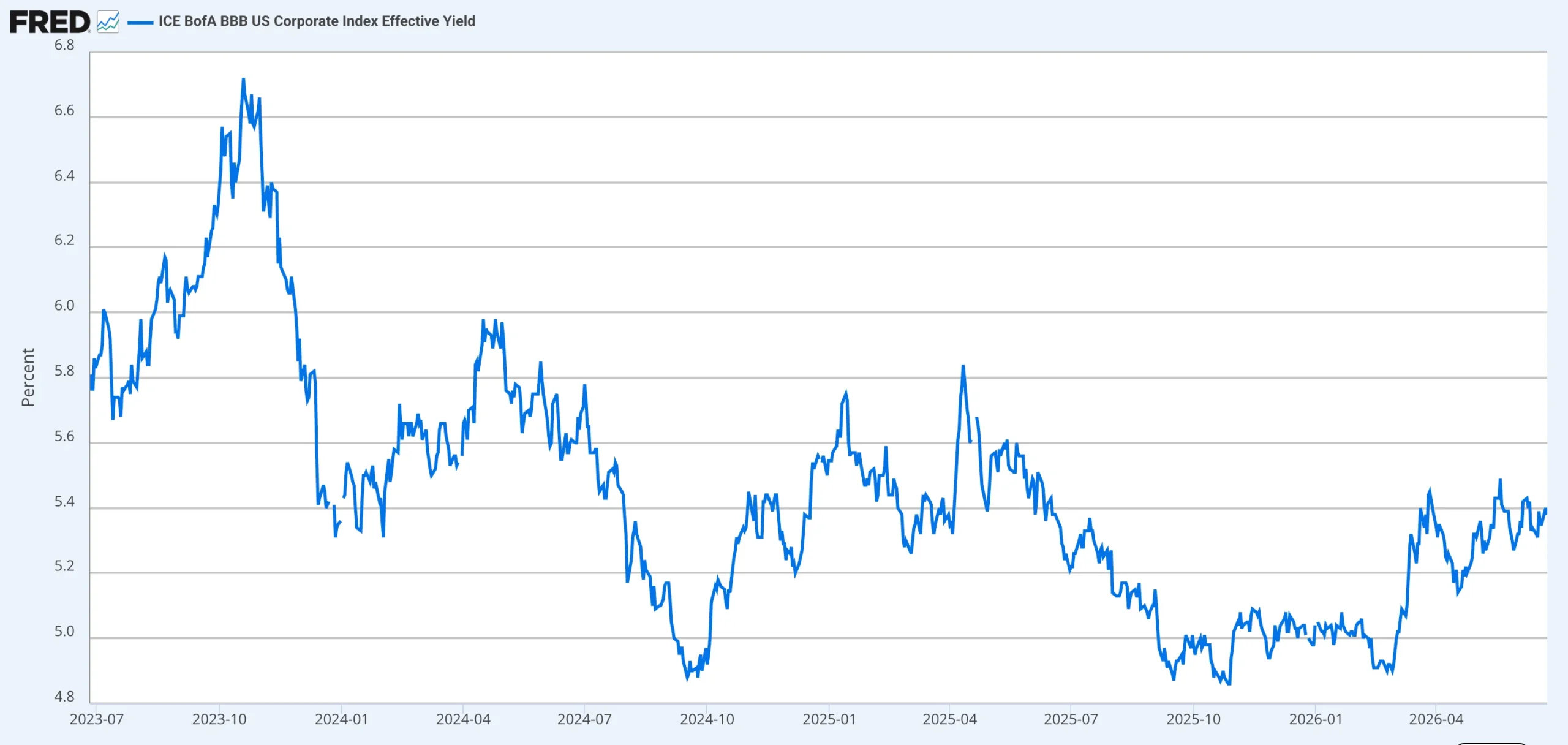
When Fink explicitly pairs the tokenization of stocks with bonds, he is pointing toward the massive global fixed-income market. For context on the traditional corporate debt instruments being eyed for on-chain migration, the effective yield of the ICE BofA BBB US Corporate Index illustrates the baseline cost of standard corporate borrowing, swinging between roughly 4.8% and 6.7% in recent years. Reformatting a corporate note carrying this exact yield into a blockchain token creates a “tokenized bond,” but its fundamental safety remains entirely dependent on the off-chain balance sheet of the corporate borrower, not the efficiency of the ledger.
Tokenized equity means equity, or equity-like exposure, represented by a token on a blockchain. Some models put a real share on-chain; others give you price exposure with none of a shareholder’s rights. The legal structure decides what you hold, and the labels “tokenized equity” and “tokenized stock” can cover very different arrangements.
ModelWhat the token representsKey questionIssuer-sponsored tokenized sharesThe actual share, recorded on-chain by the issuer or its transfer agentDoes transferring the token transfer the share itself?Custodial wrapperA claim on shares a custodian holds for youWho holds the underlying shares, and what are your rights if the custodian fails?Synthetic / linked tokenPrice exposure to a stock, without holding the shareWhat claim do you have, and against whom?Private-equity tokenizationA digital representation of private-company interestsWho is allowed to buy and transfer it?Security tokenA token formatted as a regulated securityWhich securities rules apply?ModelIssuer-sponsored tokenized sharesWhat the token representsThe actual share, recorded on-chain by the issuer or its transfer agentKey questionDoes transferring the token transfer the share itself?ModelCustodial wrapperWhat the token representsA claim on shares a custodian holds for youKey questionWho holds the underlying shares, and what are your rights if the custodian fails?ModelSynthetic / linked tokenWhat the token representsPrice exposure to a stock, without holding the shareKey questionWhat claim do you have, and against whom?ModelPrivate-equity tokenizationWhat the token representsA digital representation of private-company interestsKey questionWho is allowed to buy and transfer it?ModelSecurity tokenWhat the token representsA token formatted as a regulated securityKey questionWhich securities rules apply?
Those models are not just theory. The table below maps them to the kinds of operators running each approach, so you can see how the same word “tokenized” stretches across genuine equity at one end and a purely synthetic bet at the other. These are illustrative examples of how each model appears in practice, not endorsements, and the operating landscape shifts quickly.
Tokenization modelOperators (illustrative)How it worksLegal status of the tokenIssuer-sponsored, on-chainSecuritize, tZEROThe company issues shares directly onto a blockchain through an SEC-registered transfer agentGenuine equity, a fully compliant securityCustodial wrapperBacked Finance, OndoThe operator buys the underlying stock (say, Apple), locks it with a regulated custodian, and issues a 1:1 token against itDerivative / ETP-like: economic exposure, but usually no voting rightsSynthetic / price-linkedVarious DeFi protocolsSmart contracts use price oracles and crypto collateral to track a stock’s priceHigh-risk derivative: no claim on the actual company or its assetsTokenization modelIssuer-sponsored, on-chainOperators (illustrative)Securitize, tZEROHow it worksThe company issues shares directly onto a blockchain through an SEC-registered transfer agentLegal status of the tokenGenuine equity, a fully compliant securityTokenization modelCustodial wrapperOperators (illustrative)Backed Finance, OndoHow it worksThe operator buys the underlying stock (say, Apple), locks it with a regulated custodian, and issues a 1:1 token against itLegal status of the tokenDerivative / ETP-like: economic exposure, but usually no voting rightsTokenization modelSynthetic / price-linkedOperators (illustrative)Various DeFi protocolsHow it worksSmart contracts use price oracles and crypto collateral to track a stock’s priceLegal status of the tokenHigh-risk derivative: no claim on the actual company or its assets
Set against traditional shares, tokenized equity mainly changes recordkeeping and settlement rather than the underlying rights.
FeatureTraditional sharesTokenized equityRecordkeepingBroker, transfer agent, cap table, depositoryBlockchain or a hybrid systemSettlementStandard market settlementPotentially faster or on-chainTrading hoursUsually market hoursMay extend toward 24/7, depending on venueCustodyBroker or custodianWallet, custodian, or hybridInvestor rightsDefined by corporate law and documentsDepend on the token’s structureComplianceEstablished securities frameworkStill governed by securities laws and platform rulesFeatureRecordkeepingTraditional sharesBroker, transfer agent, cap table, depositoryTokenized equityBlockchain or a hybrid systemFeatureSettlementTraditional sharesStandard market settlementTokenized equityPotentially faster or on-chainFeatureTrading hoursTraditional sharesUsually market hoursTokenized equityMay extend toward 24/7, depending on venueFeatureCustodyTraditional sharesBroker or custodianTokenized equityWallet, custodian, or hybridFeatureInvestor rightsTraditional sharesDefined by corporate law and documentsTokenized equityDepend on the token’s structureFeatureComplianceTraditional sharesEstablished securities frameworkTokenized equityStill governed by securities laws and platform rules
Tokenization can speed up transfer and settlement, yet ownership rights, custody, disclosures, investor protections, and compliance still have to be defined somewhere. “Tokenized equity” and “tokenized stock” are not always the same thing in practice: a synthetic token can track a share price while giving you no claim on the company at all.
Are Tokens Securities?
Some tokens are securities; many are not. In the United States, the answer turns on the token’s structure, how it is sold, what it gives holders, and the law that applies, and regulators look at the economic substance rather than the label or the technology. In a March 2026 joint interpretation, the SEC and CFTC set out a five-part taxonomy that treats four categories as generally outside the securities definition and one as squarely within it.
CategoryExamplesTreated as a security?Digital commoditiesBitcoin, Ether, and similar assets that draw value from a working networkGenerally noDigital collectiblesNFTs and meme coins valued by supply and demandGenerally noDigital toolsTokens used for memberships, tickets, credentials, or accessGenerally noStablecoinsPayment stablecoins under the GENIUS ActGenerally noDigital securitiesTokenized stocks, bonds, and investment contractsYesCategoryDigital commoditiesExamplesBitcoin, Ether, and similar assets that draw value from a working networkTreated as a security?Generally noCategoryDigital collectiblesExamplesNFTs and meme coins valued by supply and demandTreated as a security?Generally noCategoryDigital toolsExamplesTokens used for memberships, tickets, credentials, or accessTreated as a security?Generally noCategoryStablecoinsExamplesPayment stablecoins under the GENIUS ActTreated as a security?Generally noCategoryDigital securitiesExamplesTokenized stocks, bonds, and investment contractsTreated as a security?Yes
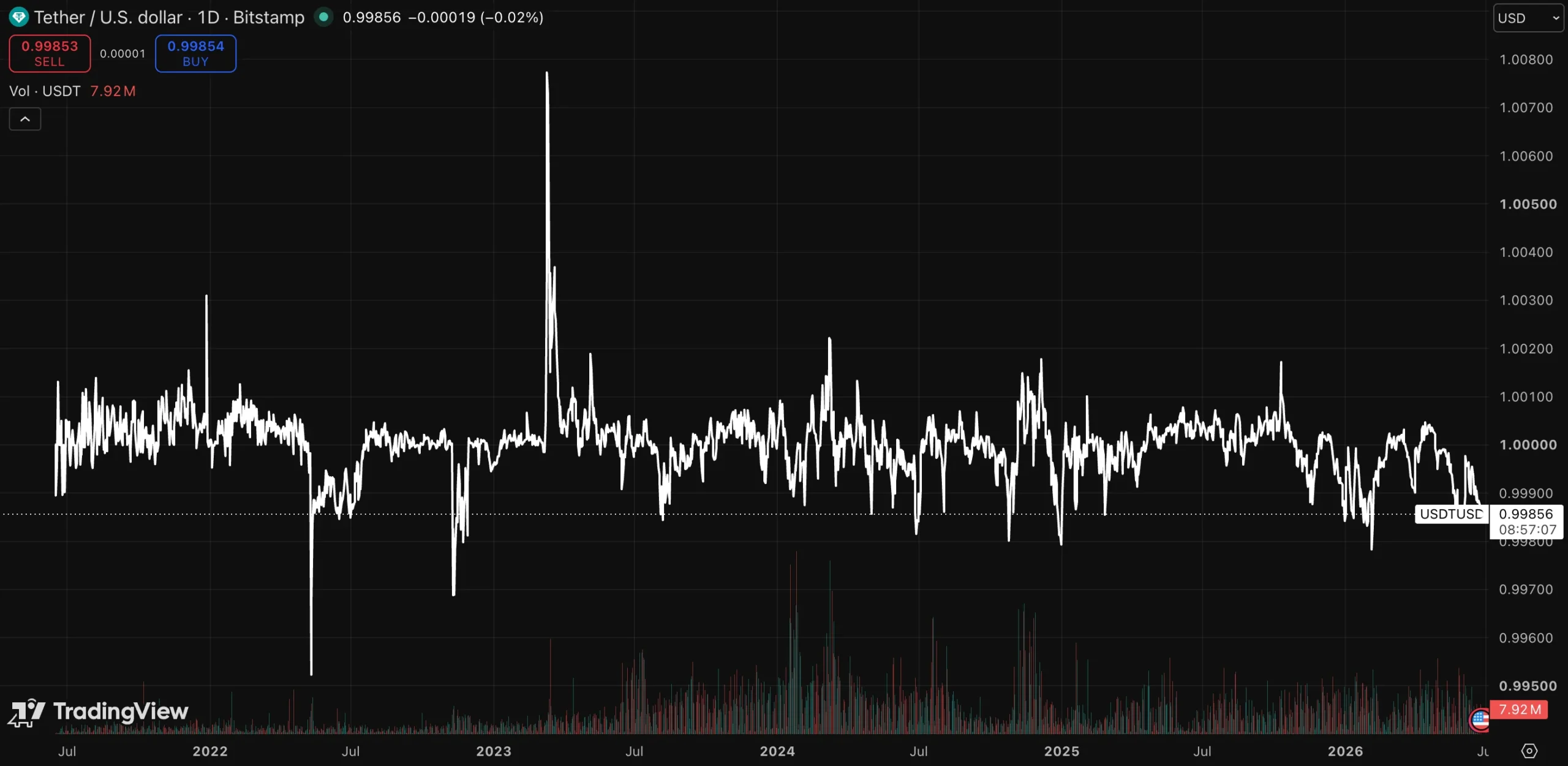
This framework distinction becomes critical when examining assets designed to act as pure digital infrastructure, such as payment stablecoins. Even though stablecoins sit generally outside the standard securities classification because purchasers have no expectation of profit, they remain highly vulnerable to underlying market mechanics. Under intense structural stress or banking panics, a digital asset designed to hold a flat $1.00 valuation can violently fracture its peg, as documented in the historical de-pegging volatility spikes of the Tether (USDT) to U.S. Dollar trading pair. Putting a traditional unit of account inside a crypto wrapper does not magically insulate it from real-world counterparty crises.
Digital securities, also called tokenized securities, are instruments that already meet the legal definition of a security but are issued or recorded as crypto assets. A January 2026 SEC staff statement made the point plainly: putting a security on a blockchain changes its format and recordkeeping, not its legal status, so a tokenized share remains a share, subject to the same registration, disclosure, and anti-fraud rules. A token’s status can also shift over time as a project decentralizes, and this framework is a US interpretation of existing law, with legislation still in progress and other jurisdictions taking their own approaches.
Token typeThe securities question to askUtility tokenIs it mainly for product or network access?Governance tokenDoes the vote create profit expectations or control?Revenue-sharing tokenDoes it give a claim on profits or cash flows?Tokenized stockDoes it represent a security or only track one?Security tokenIs it issued, registered, or exempt as a security?Stablecoin / payment tokenWhat rights and reserves back it?Token typeUtility tokenThe securities question to askIs it mainly for product or network access?Token typeGovernance tokenThe securities question to askDoes the vote create profit expectations or control?Token typeRevenue-sharing tokenThe securities question to askDoes it give a claim on profits or cash flows?Token typeTokenized stockThe securities question to askDoes it represent a security or only track one?Token typeSecurity tokenThe securities question to askIs it issued, registered, or exempt as a security?Token typeStablecoin / payment tokenThe securities question to askWhat rights and reserves back it?
None of this replaces an offering’s own legal terms or professional advice.
Equity Tokens, Security Tokens, and Utility Tokens
The token vocabulary is loose, and the words imply more than they guarantee. The rights behind each term are what matter.
TermSimple meaningImplies ownership?Equity tokenA token meant to represent equity-like rightsPossibly, depending on structureSecurity tokenA token representing a regulated securityMay cover equity, debt, or other securitiesUtility tokenA token for access or functionalityUsually not company ownershipGovernance tokenA token for votingNot by itself equityTokenized stockA token linked to a shareDepends on the legal and custody modelRWA tokenA token tied to a real-world assetDepends on the backing and the claimTermEquity tokenSimple meaningA token meant to represent equity-like rightsImplies ownership?Possibly, depending on structureTermSecurity tokenSimple meaningA token representing a regulated securityImplies ownership?May cover equity, debt, or other securitiesTermUtility tokenSimple meaningA token for access or functionalityImplies ownership?Usually not company ownershipTermGovernance tokenSimple meaningA token for votingImplies ownership?Not by itself equityTermTokenized stockSimple meaningA token linked to a shareImplies ownership?Depends on the legal and custody modelTermRWA tokenSimple meaningA token tied to a real-world assetImplies ownership?Depends on the backing and the claim
An “equity token” grants equity only when its legal structure actually does; the term itself guarantees nothing.
Tokenomics vs. Equity Ownership
Tokenomics describes how a token’s supply, distribution, incentives, emissions, burns, vesting, utility, and governance are designed. It can drive a token’s price and demand, yet it creates no shareholder rights on its own. Equity ownership is a legal claim on a company; tokenomics is an economic design.
Tokenomics factorWhy it mattersSupply capLimits or expands the total token countCirculating supplyAffects market cap and liquidityEmissionsNew tokens can dilute existing holdersVestingTeam and insider tokens may unlock over timeUtilityReal use can support demandGovernanceVoting can influence protocol decisionsBurnsDestroying tokens can reduce supplyIncentivesRewards shape behavior and selling pressureTokenomics factorSupply capWhy it mattersLimits or expands the total token countTokenomics factorCirculating supplyWhy it mattersAffects market cap and liquidityTokenomics factorEmissionsWhy it mattersNew tokens can dilute existing holdersTokenomics factorVestingWhy it mattersTeam and insider tokens may unlock over timeTokenomics factorUtilityWhy it mattersReal use can support demandTokenomics factorGovernanceWhy it mattersVoting can influence protocol decisionsTokenomics factorBurnsWhy it mattersDestroying tokens can reduce supplyTokenomics factorIncentivesWhy it mattersRewards shape behavior and selling pressure
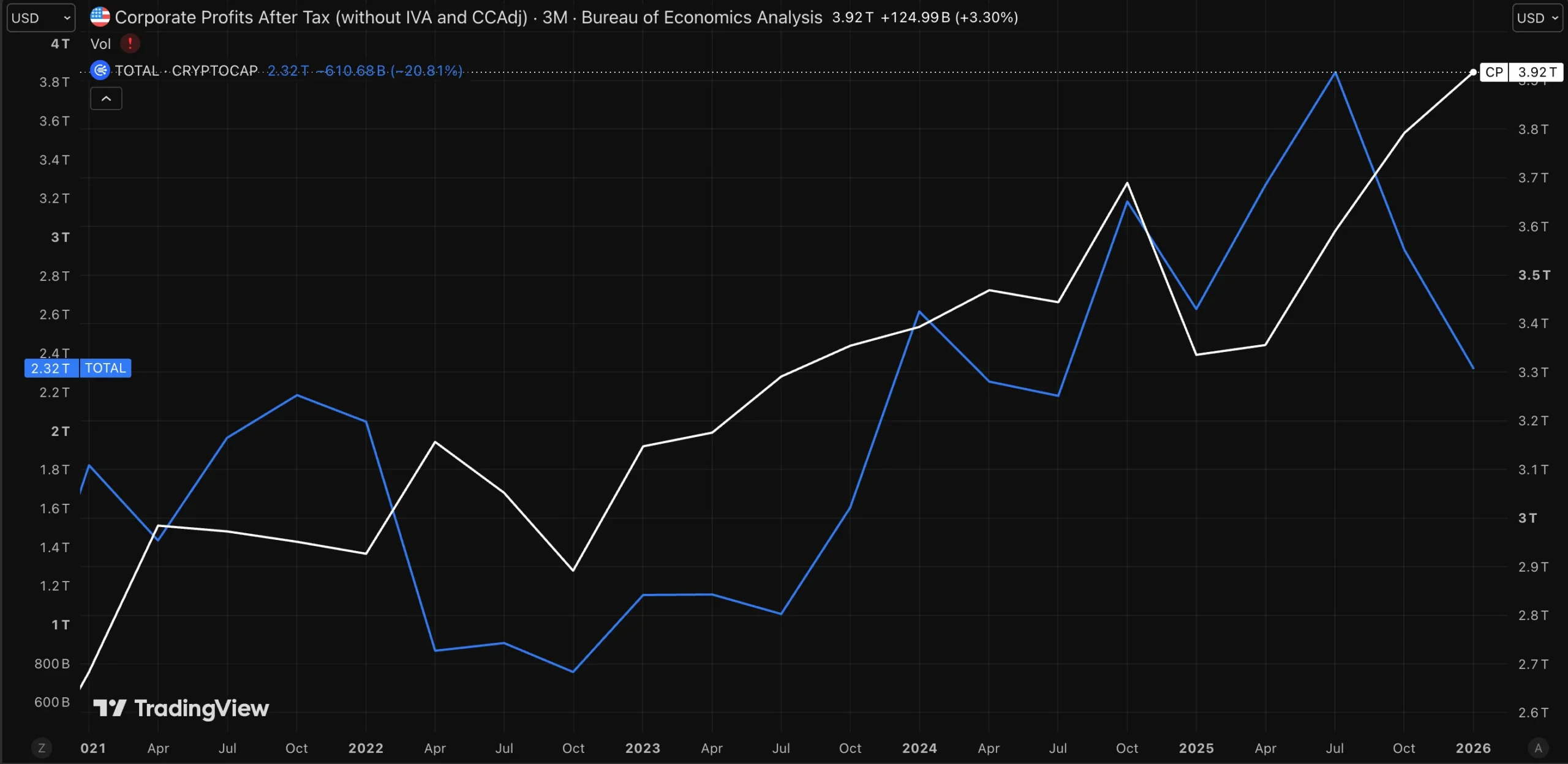
The danger of confusing a token’s purely internal economic mechanics with genuine corporate value creation becomes obvious when looking at macroeconomic capital flows. As demonstrated in the chart below, total after-tax U.S. corporate profits have pushed steadily upward toward the $4 trillion threshold, driven by fundamental commercial output; conversely, the total crypto market capitalization operates on an entirely detached, highly speculative trajectory. A rising crypto market cap reflects a surge of capital competing for finite digital units, whereas a rising corporate profit line reflects genuine, distributable cash generated by real-world commercial enterprise.
The parallels to equity are useful but imperfect.
Equity conceptTokenomics parallel (and its limit)Share issuanceToken minting and emissionsDilutionToken unlocks or inflationDividendsRewards or distributions, where they existVoting sharesGovernance tokens, protocol votes, not company controlCap tableToken allocation tableShareholder agreementToken terms and governance documentsEquity conceptShare issuanceTokenomics parallel (and its limit)Token minting and emissionsEquity conceptDilutionTokenomics parallel (and its limit)Token unlocks or inflationEquity conceptDividendsTokenomics parallel (and its limit)Rewards or distributions, where they existEquity conceptVoting sharesTokenomics parallel (and its limit)Governance tokens, protocol votes, not company controlEquity conceptCap tableTokenomics parallel (and its limit)Token allocation tableEquity conceptShareholder agreementTokenomics parallel (and its limit)Token terms and governance documents
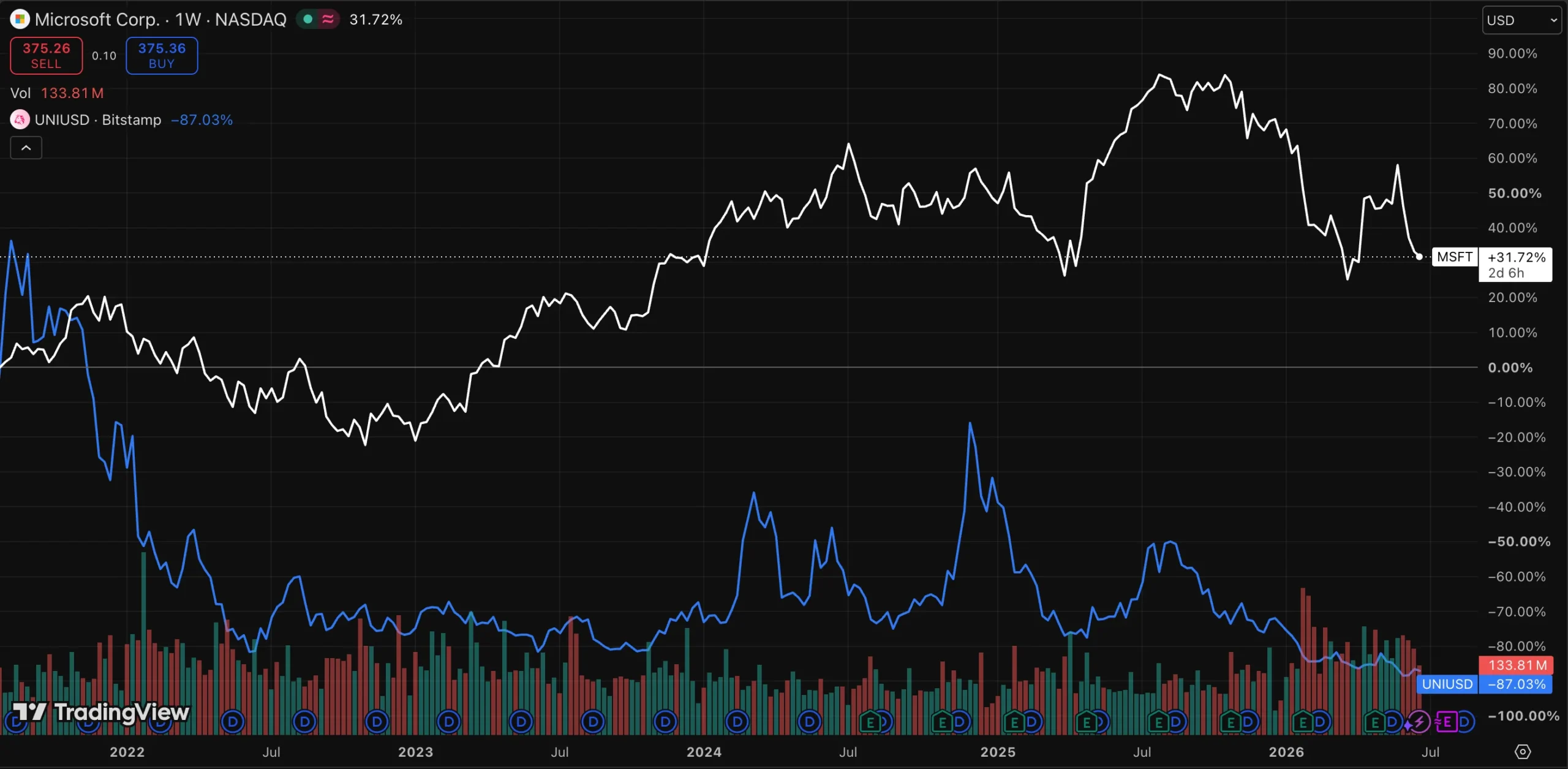
A governance vote steers a protocol; a voting share is a legal ownership right in a company. This crucial divergence is captured perfectly when contrasting the valuation of a traditional tech monopoly against a premier decentralized finance protocol. Over the exact same multi-year window, Microsoft stock delivered compounding positive returns backed by clear, enforceable shareholder claims on its software revenues, while Uniswap’s UNI toke, despite acting as the governance layer for the world’s highest-volume decentralized exchange, suffered an 87% drawdown. Because a governance token holder possesses no statutory right to capture the protocol’s cash flows, the asset’s market price can experience a catastrophic “valuation mirage” even while the underlying software succeeds.
The two rhyme, but they are not the same instrument. It’s worth keeping a skeptic’s ear here, too: as Bloomberg’s Matt Levine has repeatedly observed, crypto has a habit of reinventing the bank and the stock exchange from scratch, then rediscovering every reason financial regulation existed in the first place. Many “governance” and “equity-like” token designs are re-treading questions that corporate and securities law settled long ago.
Why the Difference Matters Before You Buy
Whether a token behaves like equity, like a ticket, or like nothing in particular comes down to documented, enforceable rights. The gap shows up most starkly in the worst case, what protects you if the thing holding your asset fails.
Protection featureEquity at a traditional broker”Tokenized stock” on an unregulated venueA crypto governance tokenAccount insuranceProtected up to $500,000 by SIPC if the broker failsNoneNoneAsset segregationYour shares are legally yours; the broker’s creditors can’t touch themYou may rank as an unsecured creditor, and your tokens can be caught up in the estateYou hold a digital unit of an experimental protocolDispute resolutionRegulated arbitration through FINRA and the SECOpaque terms of service, often mandatory offshore arbitration”Code is law” if the smart contract is exploited, the value is simply goneProtection featureAccount insuranceEquity at a traditional brokerProtected up to $500,000 by SIPC if the broker fails”Tokenized stock” on an unregulated venueNoneA crypto governance tokenNoneProtection featureAsset segregationEquity at a traditional brokerYour shares are legally yours; the broker’s creditors can’t touch them”Tokenized stock” on an unregulated venueYou may rank as an unsecured creditor, and your tokens can be caught up in the estateA crypto governance tokenYou hold a digital unit of an experimental protocolProtection featureDispute resolutionEquity at a traditional brokerRegulated arbitration through FINRA and the SEC”Tokenized stock” on an unregulated venueOpaque terms of service, often mandatory offshore arbitrationA crypto governance token”Code is law” if the smart contract is exploited, the value is simply gone
One important nuance: SIPC covers the failure of the brokerage, missing or misappropriated assets, not losses from a share’s price falling. It protects the plumbing, not your investment thesis. Even so, that protection is a world apart from holding an asset on a venue with no insurance and no asset segregation at all.
So before moving any capital into something labeled “tokenized stock” or “equity token,” run it through this five-point legal diagnostic.
- The cap table test: Is your name, or your broker’s, actually recorded on the company’s official, legally binding register of shareholders, or only in a database the platform itself controls?
- The bankruptcy test: If the platform goes bankrupt overnight, do you still own the underlying share, or do you become an unsecured creditor waiting in line for whatever’s left?
- The residual claim test: If the company is bought out at $100 a share, does a payment legally reach you, or does the smart contract route the cash to the token issuer instead?
- The dilution test: Can the team rewrite the smart contract to mint millions of new tokens at will, or are they bound by corporate charter-amendment law?
- The voting rails test: When you vote with the token, is it a formally tabulated corporate proxy vote, or a non-binding “temperature check” on a web portal?
If you can’t answer these from the offering’s own documentation, treat that silence as the answer.
Closing Thoughts
Equity and tokens can both represent value, but they are not interchangeable. Equity is a legal ownership claim on a company, while a token is a blockchain-based unit whose rights depend entirely on its design, legal terms, issuer, and structure.
The most important question is not whether something is “on-chain,” but what the holder can actually enforce. Some tokens may represent real shares or regulated securities, while others only provide access, governance, price exposure, or no meaningful rights beyond transferability.
Before buying anything described as tokenized equity, an equity token, or a tokenized stock, holders should check the legal claim, custody model, securities status, voting rights, dilution risk, and what happens if the issuer or platform fails. The label matters far less than the rights behind it.