If you’re navigating the Layer 2 (L2) landscape, you’ve probably noticed discrepancies in the Total Value Locked (TVL) numbers on platforms like DeFiLlama and L2Beat. In this guide, I’ll explain why these numbers differ and help you decide where to look when comparing L2 ecosystems.
Why Are TVL Numbers Different on DeFiLlama and L2Beat?
Let’s take an example with zkSync:
- On DeFiLlama, zkSync shows a TVL of about $117M.
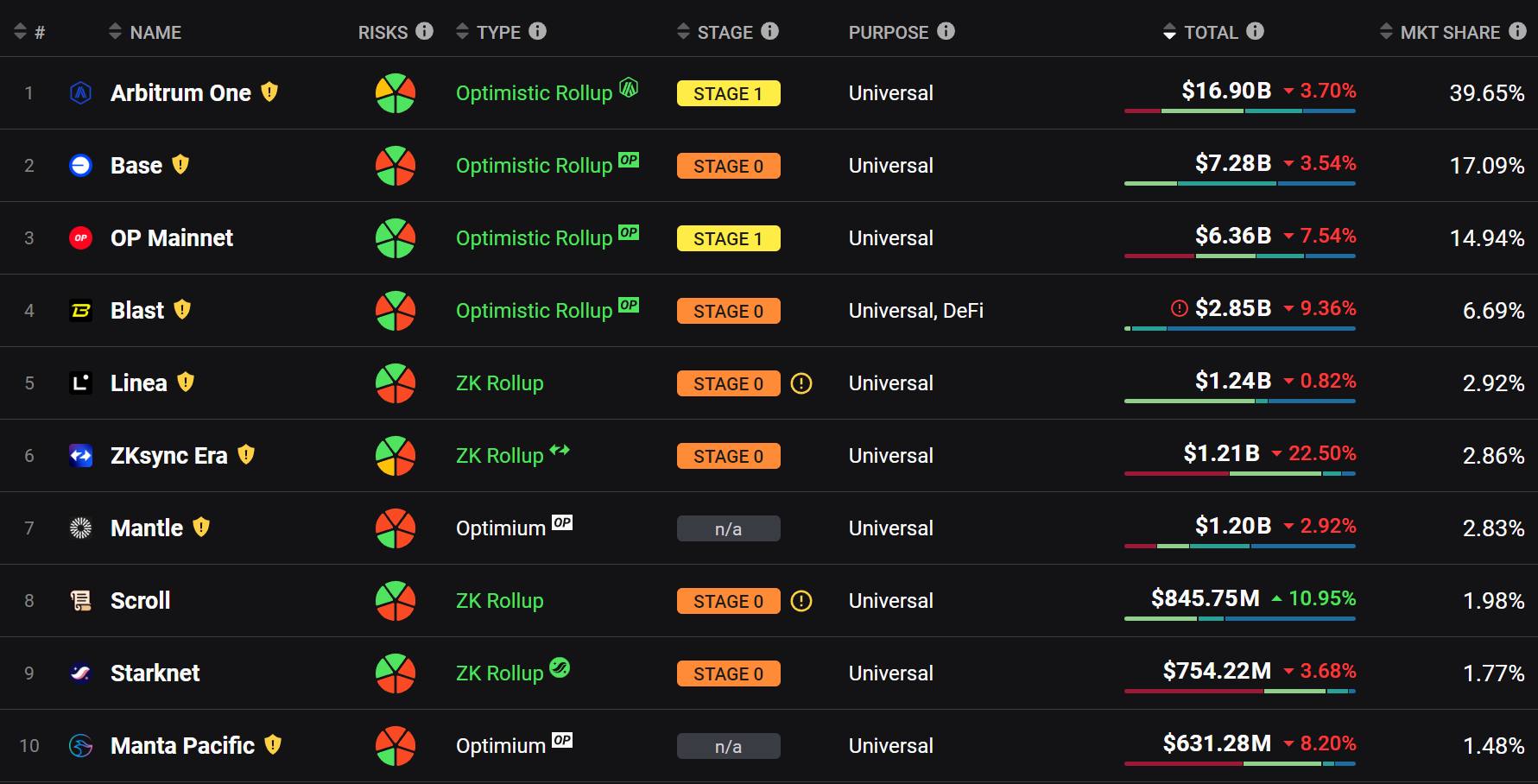
- On L2Beat, the TVL is reported to be over $1.2B.
What’s the reason for such a big difference? The key lies in the methodologies used by these platforms:
- DeFiLlama calculates the amount of assets locked into DeFi projects within the ecosystem. Essentially, it focuses on the assets actively engaged in DeFi protocols.
- L2Beat, on the other hand, counts both the assets locked into DeFi projects and the total amount of assets that have flowed into the L2 ecosystem, regardless of whether they are actively engaged in DeFi.
To put it simply, L2Beat includes the assets that are just sitting idle in the L2 ecosystem, while DeFiLlama only counts the assets actively being used in DeFi protocols. This difference leads to the significant variance in TVL numbers, as shown in the zkSync example.
Which Platform to Use for TVL Comparisons?
For a clearer and more DeFi-focused comparison between different L2 ecosystems, DeFiLlama is usually the go-to. When comparing L2 networks based on TVL in DeFi projects, DeFiLlama provides a more straightforward perspective, especially if you’re interested in the activity and liquidity within the ecosystem’s DeFi protocols.
Current TVL Leaders in the L2 Ecosystem
As of now, Arbitrum holds the crown for the highest TVL among L2 networks, leading by a significant margin.
In the top 10 L2 networks, Scroll remains one of the few that hasn’t yet conducted an airdrop. As a result, we might see a surge in the TVL for Scroll soon, once its blockchain becomes more active.
Conclusion:
Understanding where to look for accurate TVL data is crucial when evaluating L2 networks. While DeFiLlama provides a more DeFi-centric view, L2Beat gives a broader picture by including all assets within the ecosystem, regardless of their engagement. Use this knowledge to make better comparisons and investment decisions in the growing L2 space.